
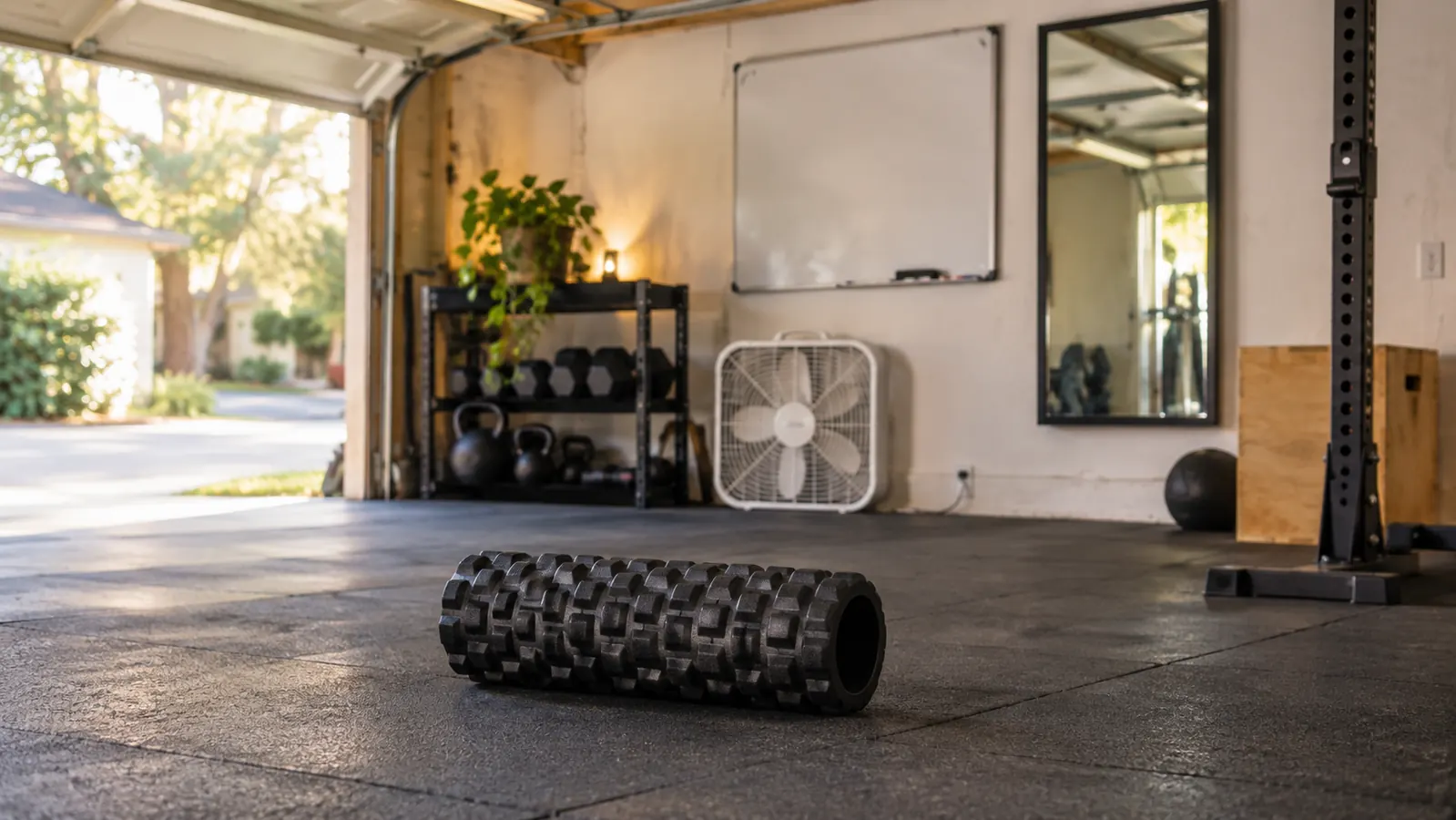
Every home gym starts with the same short shopping list: a mat, a set of bands, and a foam roller. I have watched a lot of neighbors walk into my garage on a Saturday morning and stand in front of the roller shelf like it is a menu. The question I get most is not about reps or sets. It is about which roller to buy, and specifically whether the textured ones are worth the fuss. Here is the short version: the TRIGGERPOINT GRID Foam Roller and a plain smooth roller do different jobs, and the honest answer includes the places where the smooth roller is the better call.
If you want one roller and you mostly roll to loosen up after a workout, a smooth roller is enough. It is forgiving, it has no learning curve, and nobody has ever hurt themselves figuring out how to lie on it. If you have one spot that stays tight no matter how much you stretch, and you want firm pressure you can aim, the TRIGGERPOINT GRID is the one I reach for. I keep both on the shelf in the garage bay, and I would not give up either. What follows is how they actually behave in a one-car garage with rubber tiles, a box fan, and six neighbors who show up at eight on Saturday whether I am ready or not.
| TRIGGERPOINT GRID | Smooth foam roller | |
|---|---|---|
| Surface | Multi-density GRID with ridges and nodules across a three-dimensional surface | One smooth, uniform surface from end to end |
| Pressure | Extra firm foam that pushes back and can be aimed at a single area | Softer contact that spreads load over a wider area |
| Length and coverage | 13 inches, so you work one side of the back at a time | Often longer, so both sides of the spine roll in one pass |
| First-week comfort | The ridges take a few sessions to settle into | Nothing to get used to, it feels like a cushion |
| Weight and storage | 1.1 pounds and 13 inches, so it drops into a bin or onto a shelf | A longer body that wants floor space or a corner to lean in |
| Holding its shape | Extra firm foam has stayed firm under daily body weight | The softer ones I have used have dented and gone soft over time |
| Learning curve | You aim the ridges, which takes a session or two | Nothing to learn, ever |
| Best for | One stubborn spot, deep work, and people who like firm pressure | Warm-ups, cool-downs, and anyone who flinches at firm pressure |
Where the TRIGGERPOINT GRID Wins
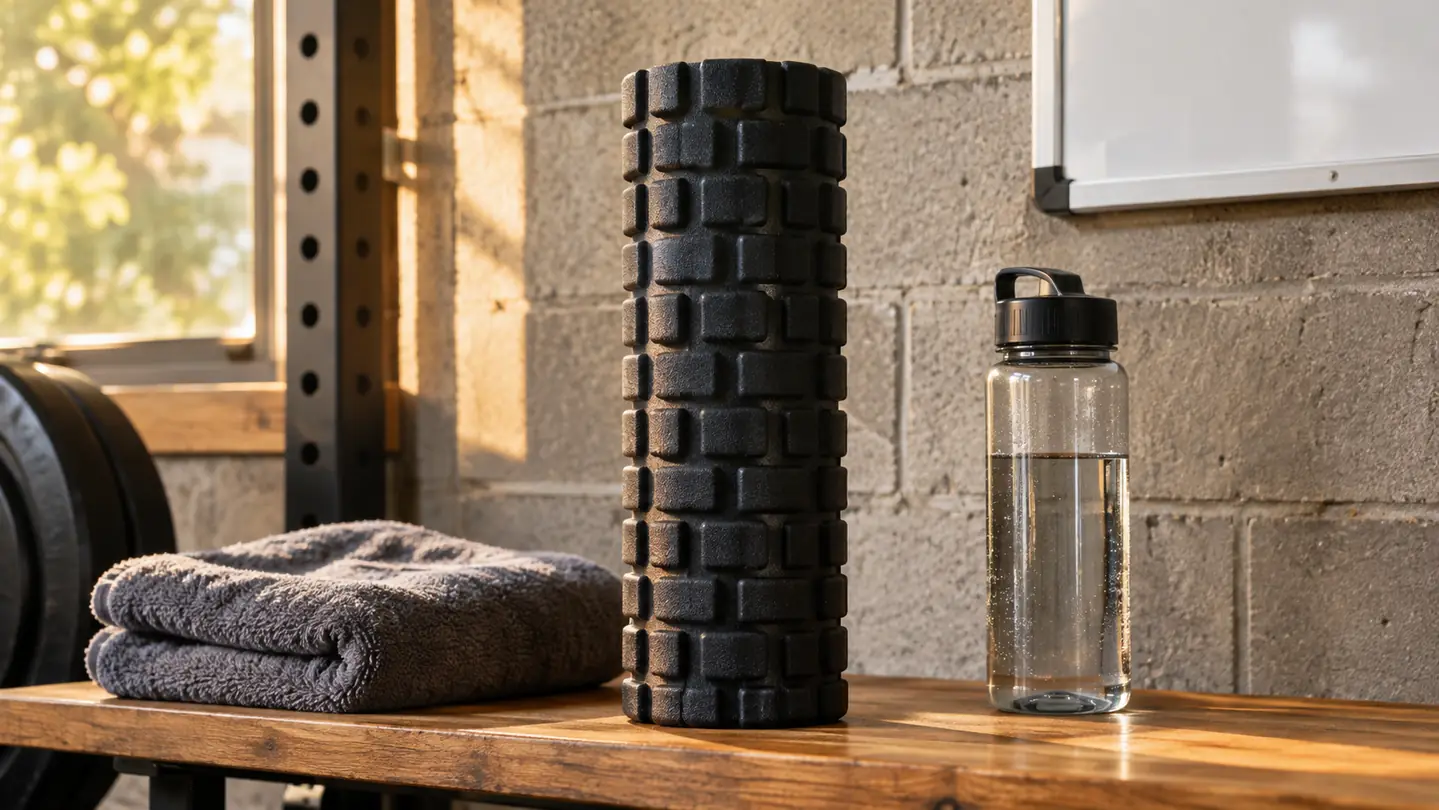
The GRID wins on aim, and that is the whole argument for it. The surface is not one flat cylinder of foam. TRIGGERPOINT builds it as a multi-density pattern of ridges and nodules across a three-dimensional surface, which the listing calls Distrodensity Zones. In practice that means I can put a ridge directly on the spot that is complaining and lean my weight into it, instead of spreading pressure across six inches of leg and hoping something in there loosens. When my right calf gets cranky after a long walk, I know exactly where to put the roller. That precision is the difference between rolling and actually working on something.
The second win is that it holds up. The GRID is listed as extra firm, 13 inches long, about five inches across, and 1.1 pounds, and it has stayed firm through two years of Saturday mornings and a fair amount of body weight. Ray is 58 and carries more of it than I do, and the foam has not gone soft where he leans on it. The smooth roller I bought years before it started out fine and slowly became a suggestion of a roller. If you want one that feels the same in year three as it did in week one, the GRID is the safer bet.

Where a Smooth Roller Wins
A smooth roller wins the first week, and I do not want to wave that away. The GRID's ridges are a lot on tender muscles. The first time I rolled my right quad on it, I made a noise that brought Ray out of the house. A smooth roller feels like a cushion with a job. If you are returning to exercise after a long break, or you simply have a low tolerance for pressure, the smooth one gets you rolling today instead of building up the nerve. That matters more than any texture. The best roller is the one you will actually lie down on. I learned that the hard way in my first month back after the shoulder injury. I borrowed a textured roller from a friend, hated it, and quit rolling for two weeks. A smooth roller got me on the floor that same afternoon, and I stayed with it for a year before the GRID ever came into this garage.
It also wins on coverage and on simplicity. The smooth rollers most of us start with are longer than 13 inches, which means you can lie on one and roll both sides of your spine in a single pass. With the GRID you work one side, then the other. There is nothing to learn on a smooth roller, no ridges to position, no reason to think about which part of the surface you are on. And for a lot of people the honest answer is that the smooth roller is already leaning in the corner of the room. Something you own and use beats something better that stays in the closet.
The roller I point people toward when the same spot keeps coming back
Extra firm, textured enough to put pressure exactly where you aim it, and 13 inches of it that will fit on your shelf. See today's price and the current listing on Amazon.
Amazon Check Today's Price on Amazon →How I Tested Both in My Garage Bay
I rolled on both for eight weeks, alternating mornings, in the one-car garage bay I have converted with rubber floor tiles, a box fan, a whiteboard, and a single wall mirror. My rules were simple. Same warm-up, same time of day, same order of body parts. I started with my right shoulder, which I injured years ago and still warm up carefully, then moved to calves, thighs, and upper back. I noted each morning how the shoulder felt on the first roll, because first contact tells you more about a roller than anything that happens five minutes in.
Ray joined me twice a week, which gave me a second body to test on. His left knee is not a fan of body weight on a roller, so the interesting question was whether the outside of his thigh and the muscles above the knee felt different between the two. My Saturday group of about six neighbors also got a turn. I handed each of them both rollers and asked which one they would reach for if they could only keep one. The answers split almost exactly down the middle, and the split followed experience rather than age. Ray's own verdict came on a Tuesday. He had mowed the lawn the day before and his left knee was talking to him, so he rolled the outside of his thigh on both, one after the other. He said the smooth one felt like a warm blanket and the GRID felt like a thumb, and he meant both as compliments. He has reached for the GRID on the mornings he works out with me ever since.
Two things surprised me. The first is that the textured roller did not bother anyone as much as they expected. Almost every neighbor who flinched at the look of it settled in within a minute. The second is that the smooth roller was not boring. People who used it reported the same general loosening after a session, just spread over a wider area. Nobody needed the ridges to feel better. They needed them only to target one specific spot, which turned out to be a smaller group than I expected.
The smooth roller is why I could roll at all my first month back. The GRID is why I finally found the spot that was actually causing the trouble.
What the Multi-Density Surface Actually Changes
A flat surface spreads your weight across the whole length of foam that touches you. A textured one concentrates it. That is the entire mechanical difference, and it is a real one. When I lie on the GRID and let my weight down slowly, the ridges and nodules press into a narrower band, and I can shift an inch to change which band gets the pressure. On a smooth roller, shifting an inch mostly changes how much of the same even pressure I get. If you have ever hunted for a tight spot by wiggling around on a roller, you already understand what the texture buys you.
What the texture does not do is make the work easier. Extra firm means extra firm. If you put your full weight on the GRID in the first session, it will feel like a lot, and the ridges will find places you did not know were tight. I tell people to start on their hands and knees rather than lying flat, with the roller under one thigh, so they control how much weight goes down. That is not a beginner's compromise. It is how I still do my right shoulder, and I have been rolling for years.
The other thing to know is that firm pressure is not the same as productive pressure. If you are clenching or holding your breath, you are bracing against the roller instead of letting the muscle let go. The GRID rewards slow, boring movement. Two inches at a time, breathing out on the part that complains. A smooth roller is more forgiving of a quick sloppy pass, which is another reason it is a decent place to start. The surface also rewards patience in a way I did not expect. My best mornings were the ones where I gave each leg a full two minutes on the GRID instead of the sixty-second pass I used to rush through on the smooth roller. Same total time on the floor, more attention per inch, and a noticeably easier walk to the mailbox afterward.
Space, Storage, and the Garage Floor
Space matters more than people expect in a one-car garage. The GRID at 13 inches and 1.1 pounds goes into a plastic bin on my shelf and comes out with one hand. That size is also why it travels well, which is not nothing if you ever roll in a living room or on a trip. The longer smooth rollers need a wall to lean against or floor space to live on, and in a bay that already holds a fan, a mirror, and a whiteboard, floor space is the first thing to run out. My shelf is one plank of wood screwed into the studs at about knee height, and it holds two rollers, a folded towel, and a water bottle. The long smooth roller has to lean in the corner beside the mirror or it rolls off. The GRID has not fallen off that shelf once in two years, which is its own quiet endorsement.
One practical note about the floor. On rubber tiles both rollers grip well. On bare concrete the GRID slid out from under me the first time I tried it, which was less about the roller and more about me. If your gym floor is concrete or smooth laminate, put a mat down first. It takes ten seconds and it stops the roller from shooting away mid-roll, which is the least dignified way to end a workout.
Who Should Buy Which
Buy the TRIGGERPOINT GRID if you have a specific spot that keeps coming back, if you like firm pressure, or if you want one roller that will still feel the same in a few years. It suits people who have been rolling for a while, and honestly it suits anyone willing to spend two sessions learning where the ridges go. Buy a smooth foam roller if you are just starting, if you are coming back from a long break, if the sight of a textured roller makes you tense up, or if you mostly want a long easy pass up and down your back after a workout. If you can only keep one and you are brand new, start smooth and upgrade later.
If you are in the middle, the way most of us are, keep both. That is not a dodge. My shelf has room for two rollers and my Saturday group uses the smooth one on their warm-up lap and the GRID on whatever is bothering them that week. One is a warm-up tool and one is a targeted tool, and they take up the same shelf space and about ten seconds of decision-making.
Start with the one that puts pressure where you point it
The GRID is the roller I hand to anyone who has one spot that will not quit. Extra firm, 13 inches, and built to keep its shape. See today's price on Amazon.
Amazon Check Today's Price on Amazon →