
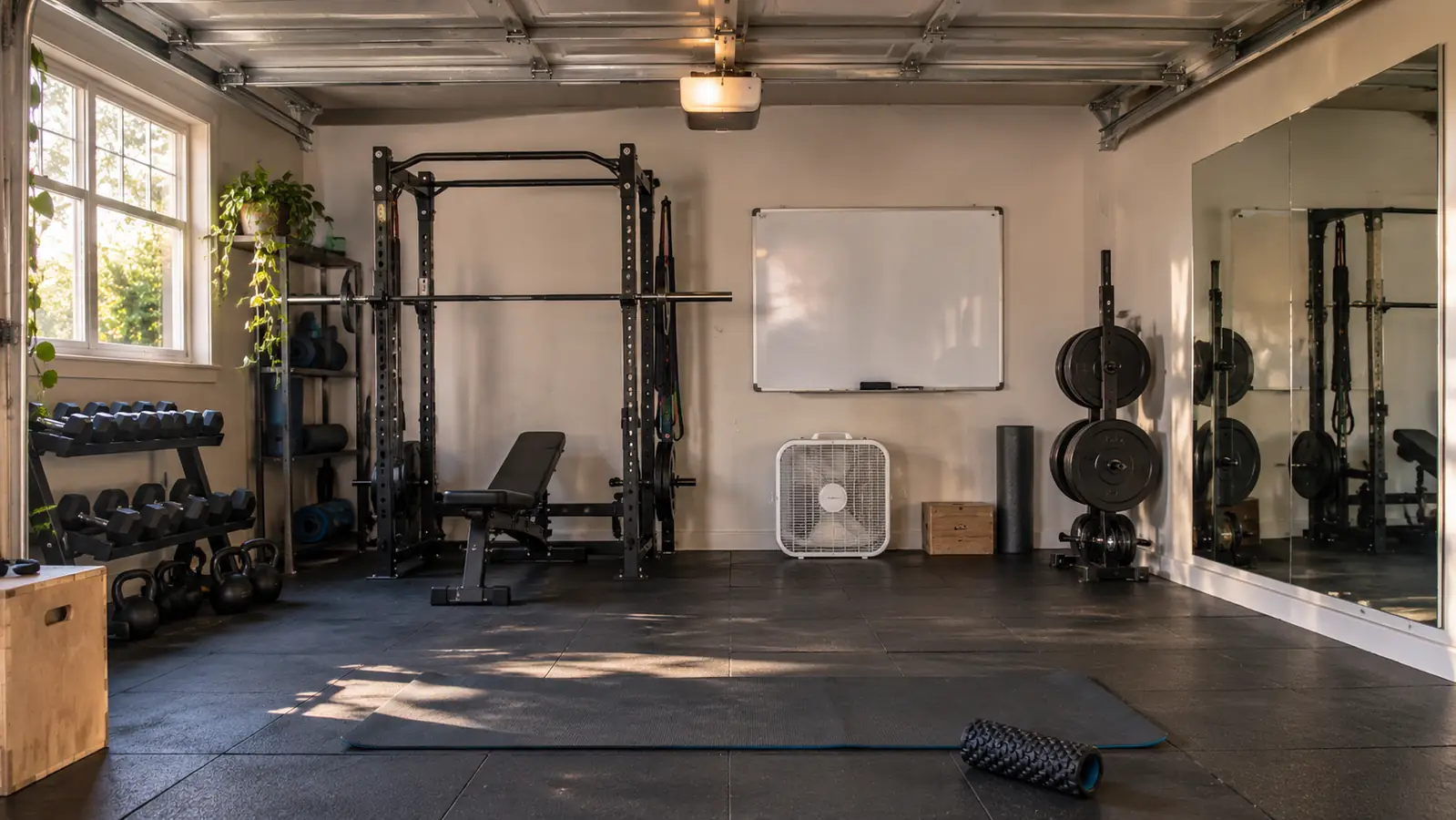
For two years, my home gym was a converted one-car garage bay with rubber tiles, a box fan, a whiteboard, and one wall mirror. It had everything I needed except a way to deal with the tightness that showed up after every squat session. I tried stretching on the floor. I tried ignoring it. Neither worked. Then I brought home the TRIGGERPOINT GRID foam roller, the 13-inch multi-density one, and gave it ten minutes before my Saturday group.
I am 52, a certified group fitness instructor, and I coach about six neighbors in that garage on Saturday mornings. We are not training for a powerlifting meet. We are people in our forties, fifties, and sixties who want to lift a little, move without wincing, and still have energy for the rest of the day. My husband Ray, who is 58 and has a bad left knee, works out with me twice a week. The roller had to work for both of us.
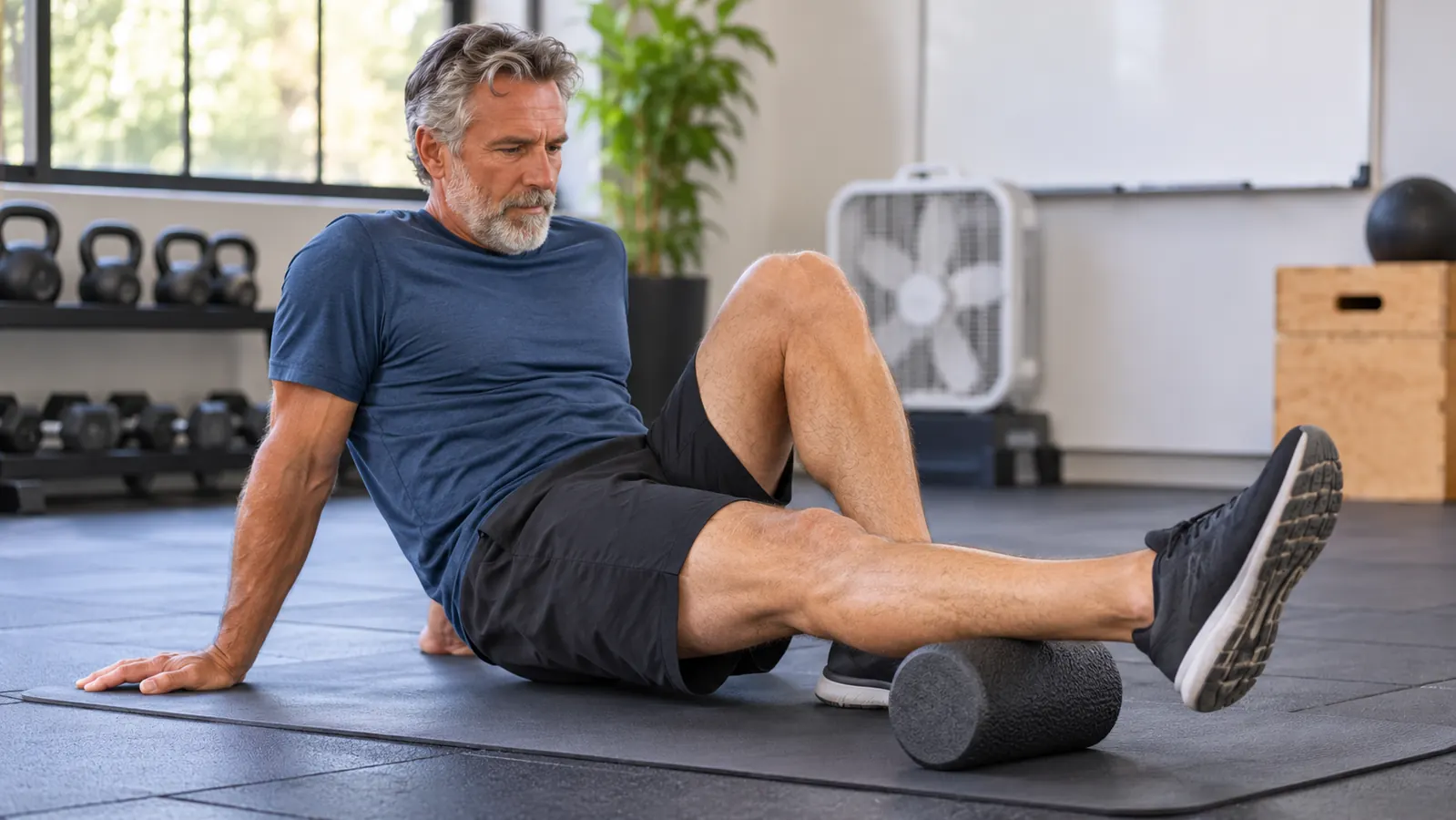
The first thing I noticed was how specific the surface feels. The GRID has a three-dimensional pattern of ridges and nodules, and TRIGGERPOINT calls the layout Distrodensity Zones. I am not going to pretend I understand the engineering. What I understand is that when I roll my calf over the flat sections, it feels broad and steady. When I hit a tight spot over one of the raised areas, I can slow down and work around it.
The roller is extra firm. That matters. A soft roller can feel nice, but it does not give me the pressure I want on a stubborn spot. This one does. I use it on my calves, quads, and upper back, and I keep the pressure manageable by controlling how much weight I put on it. I do not roll directly on my right shoulder, because I hurt it years ago and I am careful with it. I roll the muscles around it instead.
Ten minutes is my limit. I roll each area for about a minute, breathe, and move on. If I try to turn it into a twenty-minute project, I skip it. A short routine I actually do beats a long routine I avoid.
Ten minutes with the GRID before my Saturday group does more for my stiff calves than the twenty minutes of stretching I used to skip.
A 13-inch roller that earns its floor space
The TRIGGERPOINT GRID is the one piece of recovery gear that stayed in my garage after the novelty wore off. See it on Amazon and decide if it fits your space.
Amazon See the GRID on Amazon →What changed was not some dramatic transformation. It was smaller. Before the roller, I would finish a set of goblet squats and feel my calves and hips tighten while I put the weights away. Now I spend a few minutes on the floor first. My Saturday group has started doing the same. I put the roller out by the mirror, and whoever wants it uses it before we start. Nobody has to buy one. They just have to show up a little early.

Ray uses it differently. Because of his left knee, he does not roll right over the joint. He rolls the muscles above and below it, slowly, with both hands on the floor for support. I watch him do it and I can see him relax into the movement. He says it helps him feel less stiff when he stands up from the mat. That is enough for me. I am not his doctor, and I am not going to make medical claims. I am just telling you what I see in my own garage.
The size is a big part of why it stays out. At 13 inches, it fits in the corner by the whiteboard and does not take over the floor. It weighs 1.1 pounds, so I can move it with one hand or tuck it on a shelf. I have used longer rollers at other gyms, and they are fine, but they are also a commitment. This one is easy to keep within reach, which means I actually use it.
The extra-firm foam took some getting used to. My first few sessions were short because I was not ready to spend a lot of time on it. I started with the flat parts of the surface and worked up to the raised areas. If you are new to rolling, that is the way I would do it. Ten minutes is plenty. You do not need to grind through pain to get something out of it.
I also like that it is simple. There is no app, no battery, no charging cable. It is a foam roller. I pick it up, put it on the floor, and use it. When I am done, I wipe it down and put it back by the mirror. That simplicity is why it became part of my routine instead of another thing I had to remember to charge.
What I'd Tell You If We Were Sitting at My Kitchen Table
I would tell you that the TRIGGERPOINT GRID is not going to fix your knee, your shoulder, or your bad habit of skipping warmups. It is a tool. What it does well is give you a simple way to spend a few minutes on the tight spots that make movement feel harder than it needs to be. If you have a garage gym, a spare room, or a corner of the living room, and you want one piece of gear that does not need power or a screen, this is a good one to try. If you hate floor work, or you know you will not use it, save your money. I would rather you spend ten minutes walking around the block than buy a roller that becomes a doorstop.
The recovery tool I reach for first
If the GRID fits the way you train, see it on Amazon. Start with short sessions, use the flat sections first, and keep it where you can see it.
Amazon See the GRID on Amazon →