
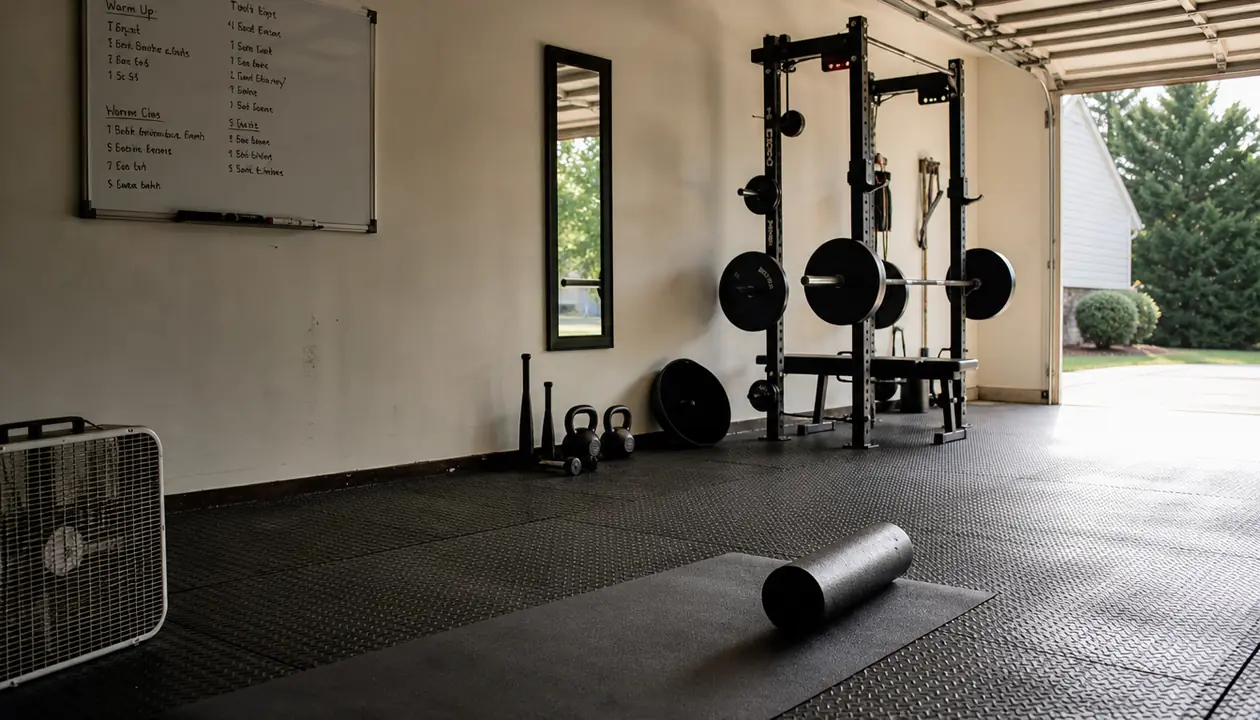
Months ago I unrolled the TRIGGERPOINT GRID on the rubber tiles of my garage gym and immediately thought I had wasted my money. My old roller was soft and forgiving, roughly the density of a pool noodle. This one is extra firm. My first pass over my right thigh felt less like a massage and more like a polite argument. I am fifty-two, I have a right shoulder I warm up carefully before every session, and I run a small Saturday morning group out of that garage bay. The last thing I needed was another piece of equipment that made me feel clumsy. So I left it in the corner for four days. Then a neighbor asked to borrow it and I heard myself say no, which told me everything I needed to know.
What changed was not the roller. It was how I used it. I had been treating it like a rolling pin, bearing down with my full body weight and muscling through. The GRID rewards something closer to patience. The surface is not one texture, and where you place your weight changes how much pressure you get. Once I worked that out, the argument turned into a conversation. My hips loosened up before Saturday group instead of during it. My calves stopped complaining on the stairs. The shoulder warm-up I used to rush through became the part of my routine I look forward to. Months in, this is the one piece of gear in my garage that never gets put away.
The Quick Verdict
Extra firm, well built, and genuinely useful once you learn to shift your weight instead of grinding. Not the roller I would hand a total beginner on day one.
Amazon Check Today's Price →The one piece of gear in my garage that never went back in the corner
Extra-firm multi-density surface, 13 inches, about 1.1 pounds, and built to hold its shape. See today's price and the current rating on Amazon.
Amazon Check Today's Price on Amazon →How I've Used It
The GRID lives beside my mat and gets used four or five times a week. My routine is unglamorous. Ten minutes before Saturday group I roll my calves, then my quads, then I spend a slow minute on each side of my upper back. After a workout I do it again, lighter, mostly on my hips. Ray, my husband, is fifty-eight and has a bad left knee. He uses it twice a week on the days he trains with me, working his calves and the outside of his thigh, and he is not a man who asks for equipment. He asked for this one by name.
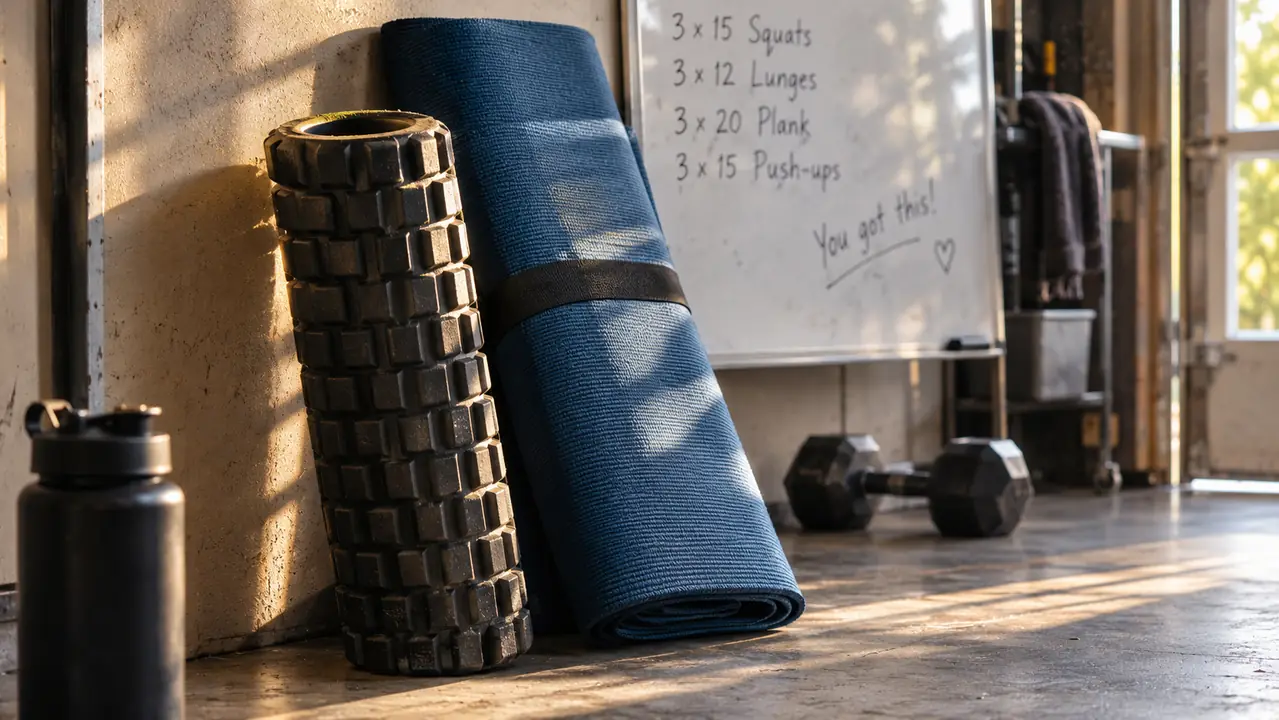
What surprised me is how much the surface does on its own. The ridges and nodules sit at different heights, so one slow pass gives you a range of pressure instead of a single flat wallop. If I want gentle, I keep more of my weight on my hands and feet. If I want more, I sink in. On a smooth roller my only adjustment is to press harder, which is exactly how people bruise themselves and then quit. TRIGGERPOINT calls the arrangement Distrodensity Zones, which is marketing language for a real thing: the firmer parts and the softer parts are placed on purpose rather than randomly.
My Saturday group is about six neighbors, and I keep the roller out where anyone can grab it between sets. Two of them are returners who had not exercised in years. Both started on their calves, which is the safest place to begin, and both now use it on their backs with their knees bent and their feet flat. Nobody has hurt themselves on it. A couple of them have complained that it is meaner than they expected, which is fair, and I tell them the same thing every time: slow down and let your weight do the work.

What the Multi-Density Surface Actually Does
A foam roller is a simple object, and most of them are exactly what they look like: one density from end to end. The GRID is not that. It is built with foam of varying density across a three-dimensional surface, so the parts that contact you are not uniform. That matters more than it sounds like it should. When you roll a tight muscle over a single firm surface, the body tends to brace against it. When the surface varies, the muscle gets a mix of pressure and release in the same pass, and it lets go a little sooner.
The firmness is listed as extra firm, and I would take that seriously. This is not a starter roller in the way a soft flat roller is. The foam holds its shape and pushes back. On my quads and the outside of my hips, that is exactly what I want. Along my lower back, right next to the spine, I am careful. I roll parallel to the spine and never on it, and I keep my knees bent. That is a technique rule rather than a knock on the roller, and it applies to every foam roller I have ever used.
The 13-inch length is the part I had to adjust to. It is compact, which makes it easy to store and easy to carry out to the garage, and it fits neatly across my calves and between my shoulder blades. It is not long enough to lie across for a two-sided back roll the way a longer roller is. I roll one side at a time and it takes a little longer. After a few weeks I stopped noticing. If a long sweeping back roll is the only thing you want a roller for, this is the wrong shape for that job.
How It Held Up Over Months of Use
This is where a cheap roller gives itself away. The soft one I had before developed a shallow dent where my hips landed, and after a year the surface had gone shiny and slick. The GRID still looks like it did the week I bought it. No flat spots, no crumbling edges, no soft patches I can find by pressing with my thumbs. The listing describes the foam as chemical free, and I have not noticed any smell, which I could not say for the first roller I ever owned.
It is also light, about 1.1 pounds, so I move it around the garage without thinking about it. It goes on the rubber tiles for floor work, and I have braced it against the wall for calf work while I hold the whiteboard frame steady with my other hand. It has been stepped on, dropped, and used by six different people with six different ideas about how hard to press. Nothing has dented. Nothing has gone soft. My previous roller lasted about a year before it started to give. This one has not started yet.
The one honest wear note is cleaning. The ridges and nodules collect dust and garage grit in the low spots. A damp cloth handles it in about ten seconds and I do it every couple of weeks. That is the whole maintenance story. No cover to wash, no strap to lose, nothing to recharge. On the rubber tiles it stays put. On bare concrete it will slide a little if I am careless, which is a floor problem more than a roller problem, and it is why I keep a mat down.
The Ten-Minute Routine I Actually Stuck With
The routine that stuck is short, and that is why it stuck. Before Saturday group I roll my calves for about a minute each, then my quads for a minute each, then I sit up and work the outside of each hip in slow passes. That is eight minutes. The last two I spend on my upper back, one side at a time, knees bent, feet flat, rolling parallel to the spine and never on it. Then I stand up, take three slow breaths, and set out the folding chairs.
After a workout, if I am honest, I do less. Two or three minutes on whatever feels loud that day. The GRID is good for that because I do not have to hunt for the right spot. A couple of slow passes and I can tell whether the muscle wants more or wants me to leave it alone. That feedback is the part I did not expect from a piece of foam. It is also the reason I stopped reaching for the soft roller. On that one, everything felt like nothing.
Ray's version is different and worth mentioning. Because of the bad left knee he never rolls near the knee itself. He works the calf and the outside of the thigh on that leg, then the same two spots on the other side, then he is done. Twice a week, on the days he trains with me. He is not a convert to exercise in general, but he is a convert to this, and he has told two of his friends about it, which for Ray counts as a sermon.
What I Liked
- Extra-firm foam holds its shape, with no flat spots after months of near-daily use
- Ridges and nodules at different heights let you change pressure by shifting weight instead of pressing harder
- 13-inch length stores easily and fits calves and the space between the shoulder blades
- About 1.1 pounds, so it moves around a garage gym without a second thought
- Wipes clean with a damp cloth, no cover to wash and nothing to recharge
Where It Falls Short
- Too firm for a total beginner or for bony spots like the shin and the area along the spine
- Short length means rolling one side at a time on back work
- Grit collects in the low spots of the pattern and needs a wipe every couple of weeks
- Nothing in the box teaches technique, so you have to learn the basics somewhere else
The surface is not one texture. Where I put my weight changes how much pressure I get, and that turned out to be the whole trick.
Where It Falls Short
The biggest one is firmness, and I want to be direct about it. I have handed this roller to people who have never rolled before and watched their faces change. If you are brand new, if you are sore to the touch, or if a spot is genuinely inflamed rather than just tight, this is not where you start. A softer flat roller will serve you better for a month or two. The GRID is what you graduate to, or what you buy if you already know you like deep pressure and you know how to breathe through it.
The second is the length. Thirteen inches is compact and convenient and it is also short. When I work my upper back I get a section at a time and I have to reposition between passes. A longer roller covers more ground per stroke and takes fewer trips up and down. I have made my peace with it, because the compact size is the reason the thing lives out in the open instead of buried in a bin, and gear that lives in the open gets used. But if you have a long torso and you want one long sweep from shoulders to hips, you will notice.
The third is that it does not teach you anything. There is no routine card, no guide worth reading, nothing printed on the roller to tell you where to start or how long to stay on a spot. You will need to pick up the basics elsewhere, and the basics are simple: slow passes, keep breathing, do not roll directly on a joint or a bone, and stop when something feels sharp rather than merely tender. The roller is a good tool. It is not a coach, and it never pretends to be one.
Who This Is For
This is for the person who already has a habit, or is close to one, and wants a roller that will not go soft in six months. It suits adults in their forties, fifties, and sixties who train at home, who are stiff in the hips and calves from sitting, and who will spend ten minutes on the floor a few times a week. It suits a household like mine, where two people with two different sets of aches share one piece of equipment and neither of them wants to think about it. And it suits anyone who already tried a soft roller, found it useless, and wants something with real resistance behind it. If that is you, the TRIGGERPOINT GRID is the upgrade that finally made rolling feel like it was doing something.
Who Should Skip It
Skip it if you are brand new to rolling and you already know you are tender. Skip it if you have a condition where deep pressure on soft tissue is a bad idea, and ask your doctor or physical therapist before you start rather than after. Skip it if what you actually want is a long, gentle, full-length back roll, because the length is not there and no amount of technique will fix that. And skip it if you want equipment that arrives with a plan. Buy something softer, use it for a couple of months, learn what your body does under pressure, and come back to this one when you know. It will still be here.
If your hips are stiff before the workout instead of after it, start here
Extra firm, multi-density, 13 inches, about 1.1 pounds, and still holding its shape after months on a garage floor. See today's price and the current rating on Amazon.
Amazon Check Today's Price on Amazon →