
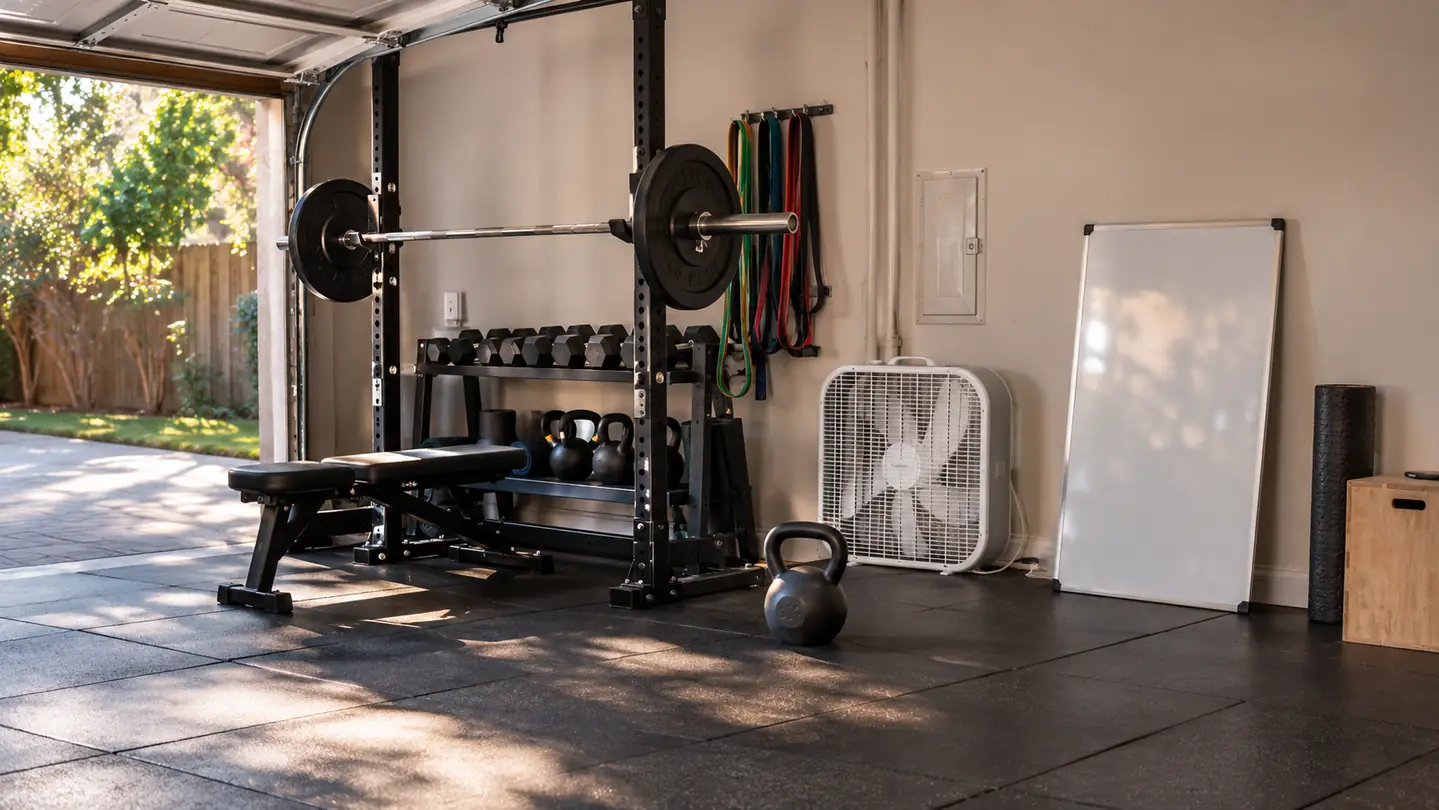
Most people who buy a kettlebell swing it like a soup ladle. They pick it up, hold it out in front of them, and muscle it upward with the arms and the lower back. Then the back gets cranky and the bell ends up behind the lawnmower for a year. I did exactly that in my garage in Tulsa before anyone taught me what a hinge was. The fix is not a harder workout. It is a shorter one, with better mechanics and a weight you can actually stop. That is where the Bowflex SelectTech 840 earns its spot in my one-car garage bay. One bell, dialed from 8 to 40 pounds, so a nervous beginner and my husband Ray can use the same piece of equipment in the same session.
Here is what I tell my Saturday group before anyone touches a handle. You are not swinging a weight. You are swinging your hips, and the bell is just along for the ride. That sentence fixes more form problems than any cue I know. The second thing I tell them is to start lighter than feels impressive. Nobody in my garage has ever gotten stronger from a swing they had to survive. The Bowflex adjustable bell goes down to 8 pounds, which is genuinely light enough to learn on, and up to 40, which is more than most of us need for swings.
Start With a Weight You Can Actually Stop
The SelectTech 840 turns from 8 to 40 pounds with a dial, so you can learn the hinge at a weight light enough to control and add load only after your form holds for three clean sets.
Amazon Check Today's Price on Amazon →Step 1: Clear the Floor and Set Your Stance
Clear a patch of floor about six feet deep and four feet wide. I paced mine out the first week with a tape measure because I did not trust my eyeballing, and it turned out the fan was sitting exactly where the bell needed to travel. It now lives against the door. Nothing should be behind you at hip height either, because a bell that gets parked mid-swing will find a shelf. I keep the one wall mirror on my left so I can see my back line, and the whiteboard leans against the wall where I can read it from the start position.
Stand with your feet roughly hip to shoulder width apart, toes turned out a touch. Not a wide sumo stance, just comfortable enough that your knees track over your toes. Ray is 58 with a bad left knee and he stands a little wider than I do, which is fine, because the stance should fit the body you actually have. Grip the handle with both hands, palms facing you, and let the bell hang at arm's length. Stand tall, take one breath, and notice whether your shoulders have crept up around your ears. If they have, drop them before you move.
Shoes matter more than people expect. A flat, firm sole keeps you from tipping forward onto your toes. I wear the same flat trainers for everything and I take the thick running shoes off before we start. Barefoot on rubber tile is fine too, as long as your feet are used to it. One of my Saturday group tried swings in cushioned running shoes for two weeks and could not figure out why she felt wobbly at the bottom. The shoes were the whole answer.
Step 2: Dial In a Weight You Can Control
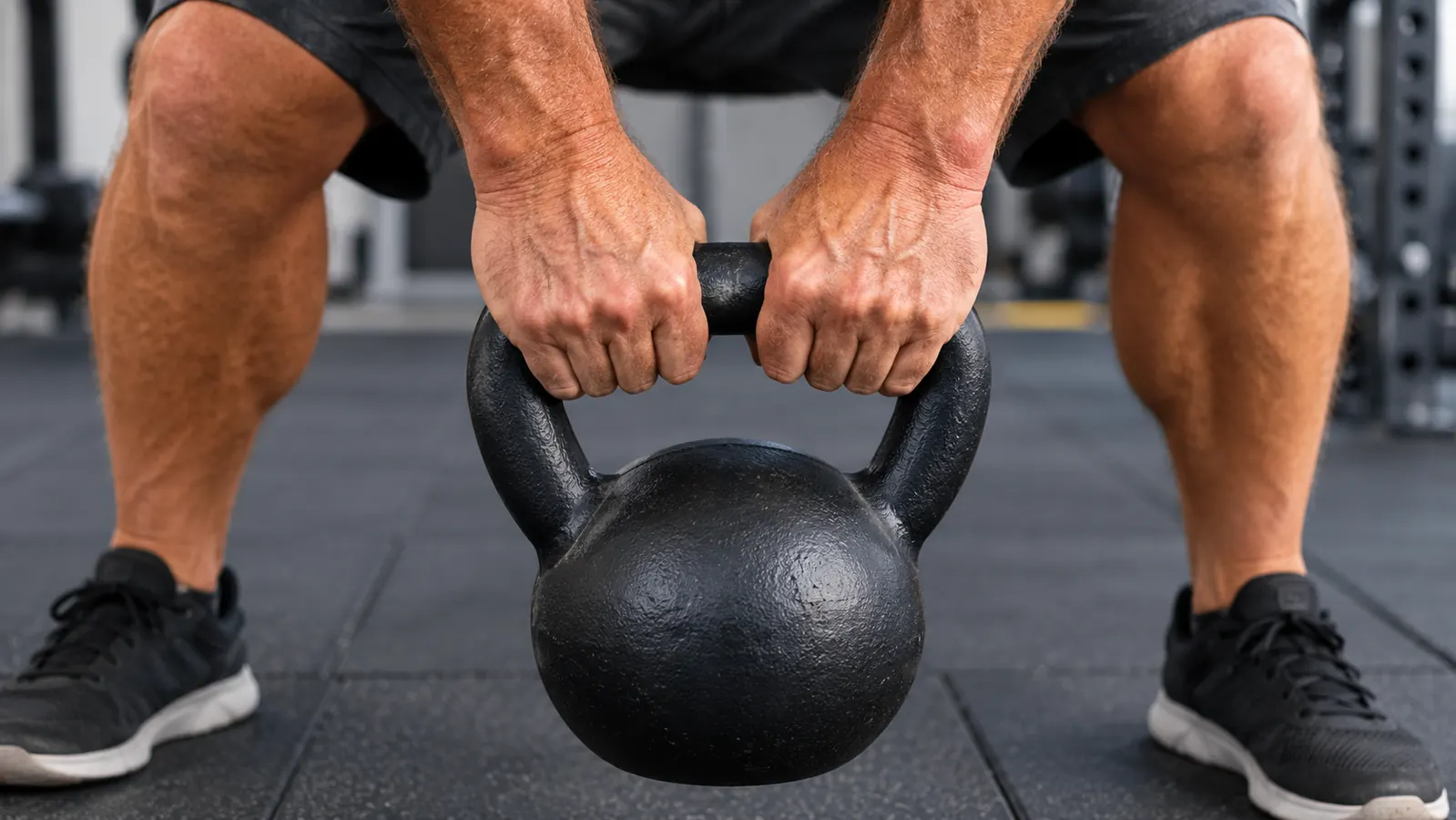
The SelectTech 840 adjusts with a dial instead of a pin, and the stack moves through six settings: 8, 12, 20, 25, 35 and 40 pounds. The Bowflex dial clicks into each setting firmly enough that you can hear it across the garage, which matters when you are changing weight between sets and not looking closely. That range replaces six separate kettlebells. In my garage that is the difference between one item tucked in the corner and a row of cast iron I have to step over to reach the fan.
Start at 8 or 12 pounds. Yes, really. A swing is a skill before it is a strength exercise, and the lighter setting lets you feel the hinge without bracing for impact. When 12 pounds feels like nothing across three sets of ten clean reps, move up to 20. I had one neighbor spend a full month at 12 because her schedule kept interrupting her, and she came back to 20 without a single ache. I would rather you spend two weeks at 12 than spend two months nursing a grumpy lower back.
The handle is 28 millimeters in diameter with a rubber and metal finish, which sits nicely in an average hand. Mine are average at best and I can hold it for a full set without feeling like I am gripping a fire hose. The base measures about 8.82 inches by 7.01 inches, so it tucks against the wall between sessions. There is a two-year warranty on the dial mechanism, which tells you the company expects it to keep working.
Step 3: Hinge at the Hips, Do Not Squat
A swing is a hip hinge. It is not a squat and it is not a lift. Push your hips back the way you would close a car door with your rear end. Knees stay soft, shins stay close to vertical, back stays flat. The bell travels between your knees, not out past your toes. The first week I taught this I put a broomstick across my back and had everyone hinge until the stick touched the mirror behind them. It looked ridiculous and it worked better than anything I said out loud.
This is the step Ray cares about most. His left knee has opinions, and a hinge loads the hips and hamstrings instead of the knee joint. When he squats his swing, that knee complains for two days afterward. When he hinges properly, it does not say a word. It took him about three sessions with the broomstick before the pattern stuck, and now he corrects me when I get lazy.
Check yourself in the mirror: chest proud, eyes on the horizon, neck long. If your back rounds and your chest caves, either the bell is too heavy or your hips are not going back far enough. Nine times out of ten it is the second one. Try the same set at a lighter setting and see whether the shape cleans up. If it does, the weight was the problem and your back was telling you the truth.
Sloppy and tired arrive at almost the same time, and the difference between them is the one rep that puts you on the couch for a week.
Step 4: Hike It Back, Then Snap the Hips
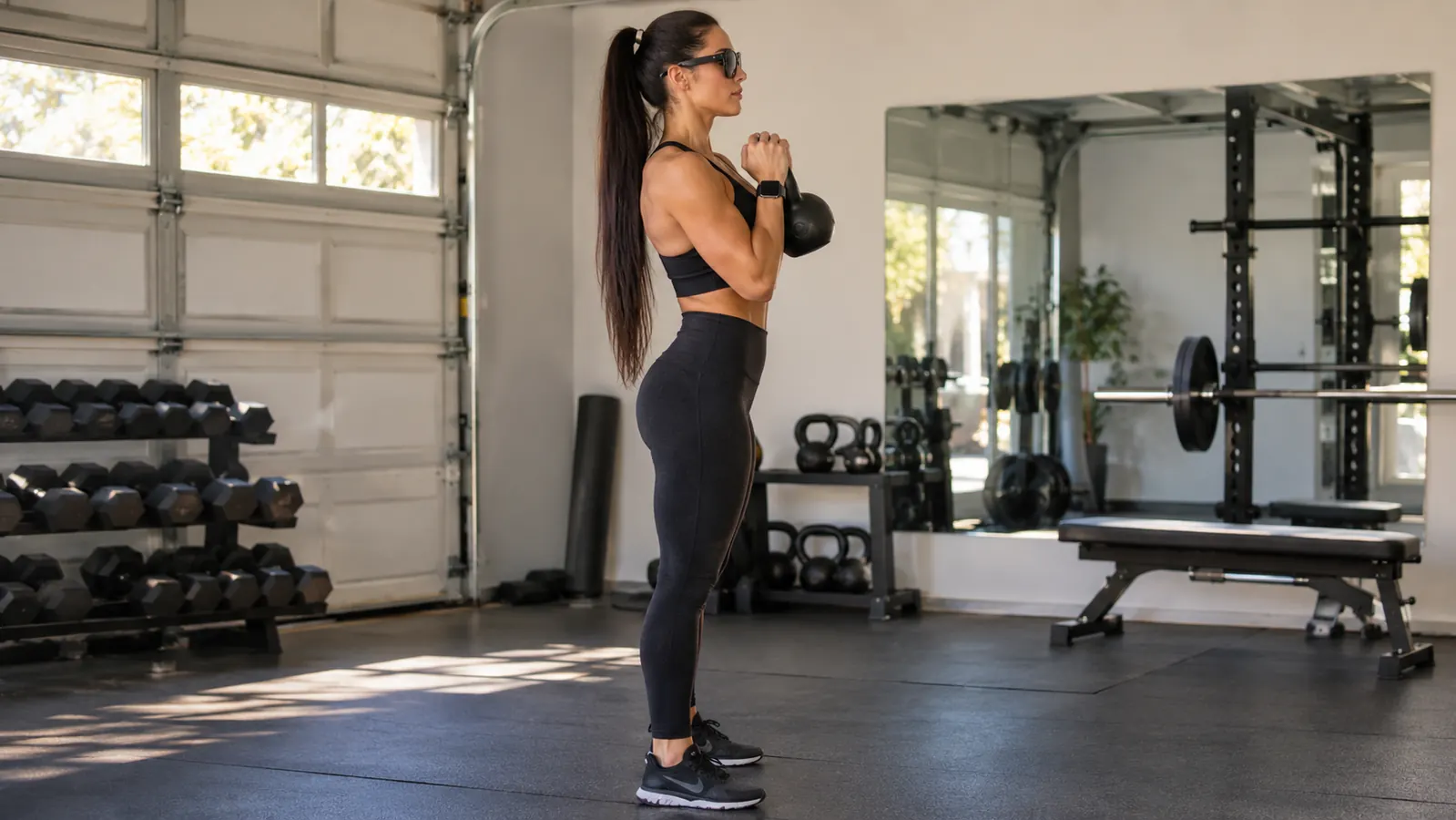
From the hinge, hike the bell back between your legs like a center snapping a football. Then snap the hips forward and stand tall. The bell floats up to about chest height on its own. Your arms are ropes. You are not lifting it with your shoulders. Keep your chin level through the whole thing, because a chin that lifts takes the chest with it, and the chest is what keeps your back flat.
That float is the whole trick. At the top, your body is straight and braced, glutes tight, ribs down, and the bell is weightless for a fraction of a second. If you are pulling it up with your arms, you will feel it in your neck and the front of your shoulders by rep six. The first time I taught this, I told the group to pop their hips and got six people popping their lower backs instead. Snap forward and stand tall is a better cue, and it is the one I use now.
I keep my right shoulder quiet on this one. I hurt it years ago and I warm it up carefully before every session. A relaxed arm with a softly straight elbow is what keeps it happy. If you catch yourself shrugging the bell upward, end the set, set the bell down, and rebuild your hinge from scratch. Nothing about a good set requires you to push through a shoulder that is telling you no.
Step 5: Stop Clean, Breathe, and Park the Bell
Finish the set by letting the bell settle back between your knees and then setting it down with a hinge, not a bend. Rounding over to park 40 pounds is how a Saturday morning ends early. Hinge, set it down flat, stand up. I make everyone do the last rep of the last set this way, even when they are tired and want to just drop it. The last rep is the one that teaches the habit.
Breathe at the top. One crisp exhale per swing works well, or one breath every two reps if the set is longer. I count sets of eight to ten with a full breath between them, three sets total while we are learning. That is genuinely enough. Swings are potent and they do not need to be endless. When we moved to a heavier setting, we dropped back to six reps per set for the first week, and nobody's form fell apart.
Stop the set the moment your form gets sloppy, not the moment you get tired. The two arrive together, and the only thing separating a good session from a bad week is whether you honor the difference. I would rather watch someone do three tidy sets of eight than one heroic set of twenty that ends in a wince. Nobody has ever left my garage disappointed that they did less.
The Mistakes I See Most on Saturday Mornings
The first and most common mistake is swinging with the arms. It looks like a front raise with extra steps, and it puts all the work into the shoulders and lower back. If your arms are tired and your glutes are not, the hips are sitting out the exercise. Fix the hinge first and the arms will settle down on their own. The test is simple: thirty seconds after the set, tell me what is tired. If the answer is not your backside, go back to Step 3.
The second is jumping to a heavy setting because light feels like cheating. It is not cheating, it is rehearsal. The 20 pound and 35 pound settings will still be there in three weeks. The third is turning a strength exercise into a cardio contest, which usually means forty sloppy reps and a sore back the next day. Also worth saying: park the bell between sets. Carrying it around the garage while you catch your breath is a small thing that adds up to a tweaked back.
The fourth is forgetting the walk-out. We finish swings and then walk a lap around the block, because the cool-down is the part everyone skips and the part that keeps the next session pleasant. It takes eight minutes and it has saved my knees more than any stretch I have ever done. The fifth is skipping a rest day. Two swing sessions a week with a day between them is plenty at our ages, and the rest is where the strength actually happens.
What Else Helps
Warm up for five minutes before the first swing. Hip circles, a handful of glute bridges on the rubber tile, five slow bodyweight hinges with your hands on your thighs, and a few band pull-aparts for the shoulders. It is not glamorous and it does not burn many calories, but it is the reason my group can swing twice a week at our ages. Ray does his hip circles before he even takes his jacket off, which is more discipline than I have.
Film one set on your phone from the side. The mirror flatters you, the camera does not. Watch for the two things that matter: does your back stay flat at the bottom, and does the bell stop at chest height rather than flying overhead. You will spot both in ten seconds of footage. I keep two clips on my phone, one from my first month and one from last spring, and the difference between them is the only progress photo I have ever needed.
Log it on a whiteboard. Three sets of ten at 20 pounds, dated. Progress in a garage gym is boring and slow, and the only way to see it is to write it down. When you look back six weeks and see that 12 became 20, that is the motivation that actually works, because it is evidence instead of a feeling. Our board currently has eleven dates on it. That board is the closest thing this garage has to a coach.
One Bell, Six Weights, One Less Excuse
The SelectTech 840 goes from 8 to 40 pounds with a turn of the dial, so you can learn the swing light and stay with it as you get stronger. It takes up about nine inches of floor and replaces six bells. For how it has held up across months in my garage, read the long-term review, or see how it stacks up against a cast iron bell.
Amazon Check Today's Price on Amazon →