
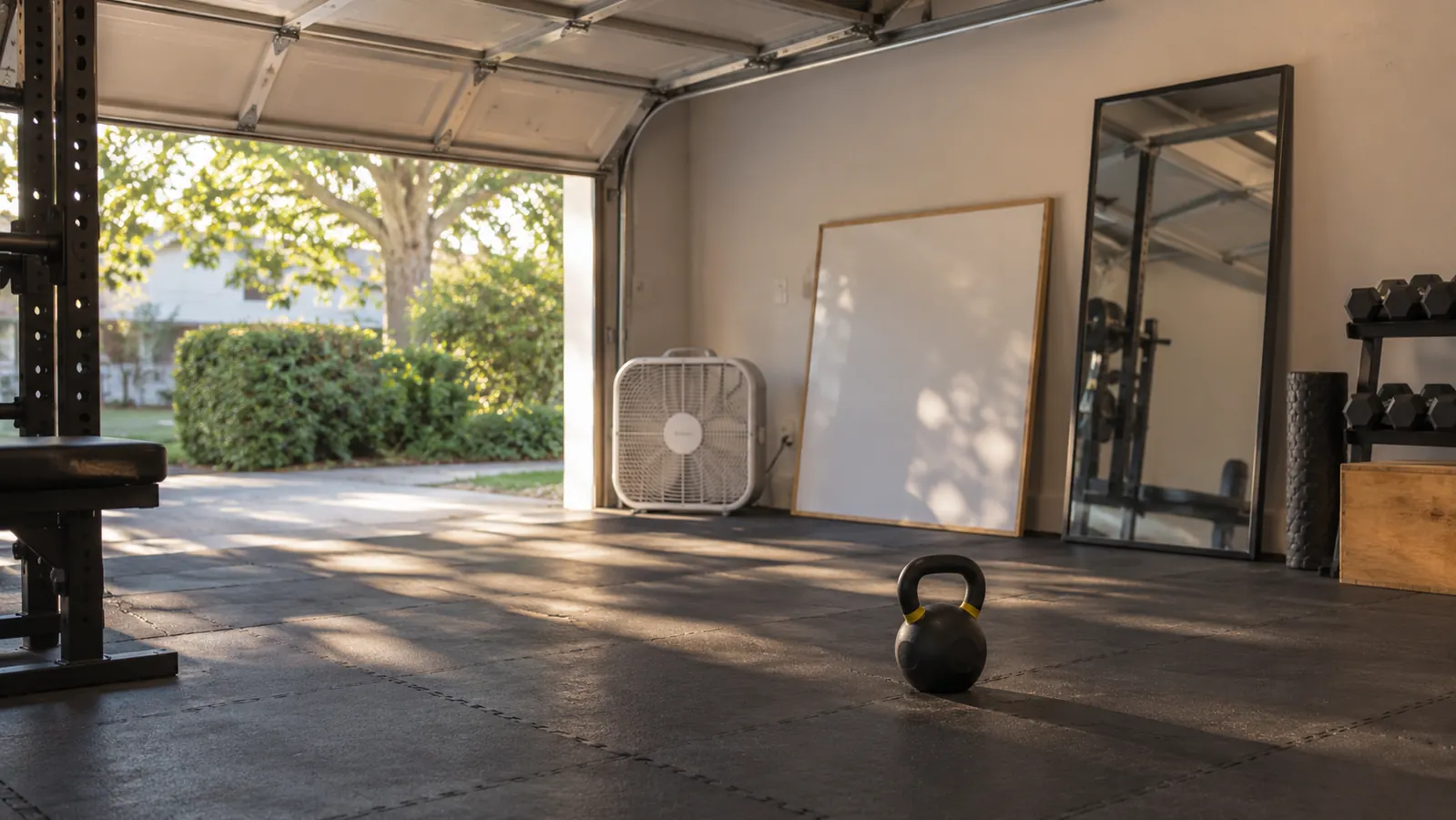
My converted garage bay has rubber floor tiles, a box fan, a whiteboard and one wall mirror. In January it also had six cast iron kettlebells lined up along the wall, and I tripped over the 20 pounder twice a week. I teach a Saturday morning group of about six neighbors, and every one of them lifts at a different weight, so every one of them needed a different bell. That is how a garage ends up as an obstacle course. The Bowflex SelectTech 840 is the reason five of those bells left. One bell, one dial, eight to forty pounds.
I am 52. I hurt my right shoulder years ago and I warm it up carefully, so I am fussy about handles and about how big a jump in weight I take between sets. Ray, my husband, is 58 and trains with me twice a week on a left knee that complains. Between the two of us we need a bell that starts light, tops out somewhere useful, and does not make us walk across the garage to find it. Here is why this one earned its spot on the tile.
Six kettlebells worth of range, one object on the floor
If your garage is already full of things you step around, this is the version of the kettlebell that stops taking up a wall.
Amazon Check Today's Price on Amazon →Replaces six kettlebells in the width of a shoebox
The SelectTech 840 covers 8, 12, 20, 25, 35 and 40 pounds. That is six bells. Its footprint is 8.82 inches long by 7.01 inches wide, so it tucks under the edge of the whiteboard and stays out of the walking path. In a one-car garage bay that already holds a mat, a fan and a mirror, floor space is the whole argument. I cleared a shelf and did not replace it with anything.
Change the weight mid-set without breaking your rhythm
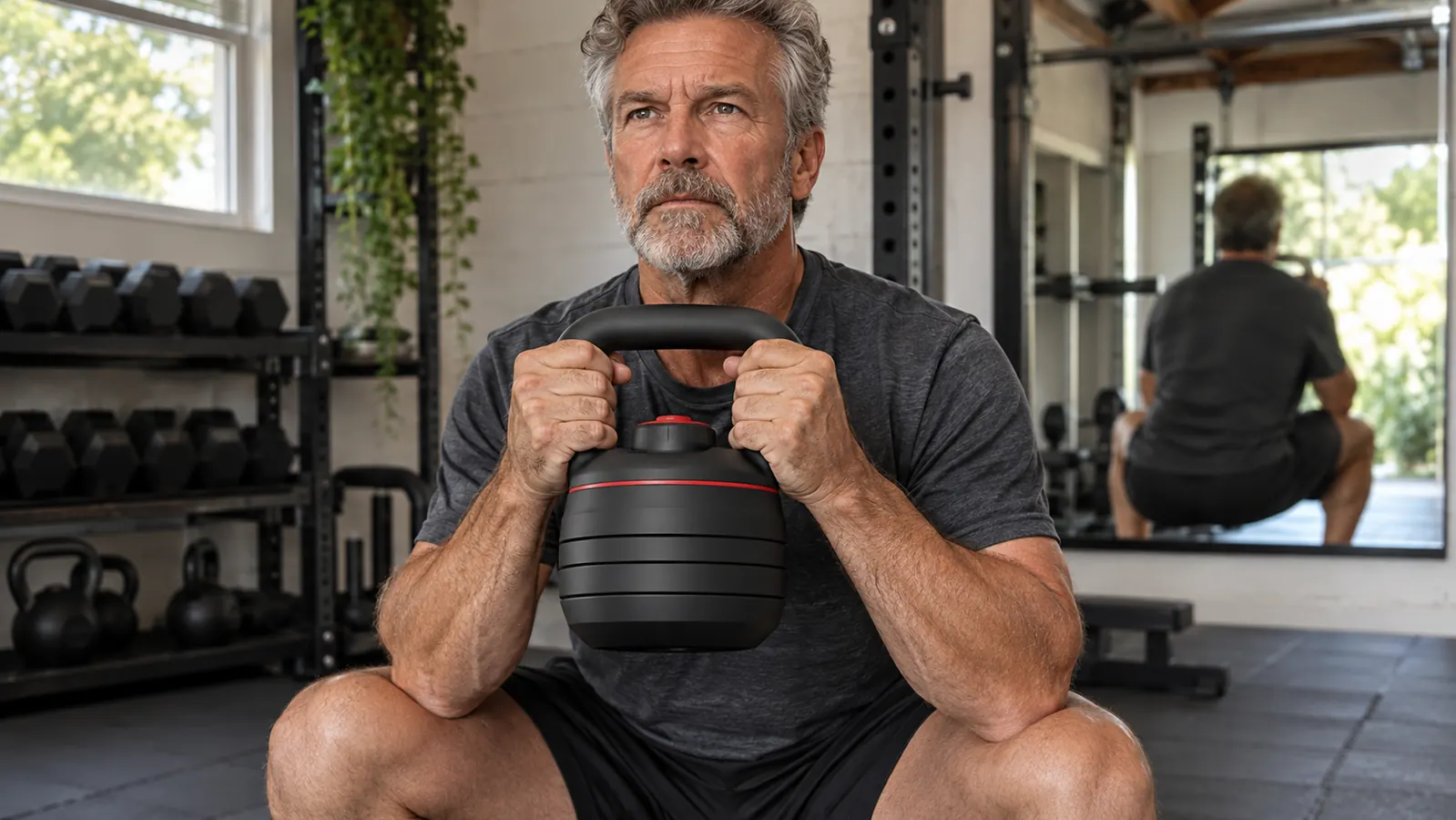
You turn a dial. That is the whole mechanism, and it is the reason the thing stays in my workout instead of getting skipped. In a circuit that goes from a 25 pound swing to a 12 pound press and back, walking to a rack and swapping bells costs me the breathing pattern I just built. Bowflex built this for exactly that switch. Thirty seconds of fiddling is enough to make a beginner quit doing circuits, and quitting is what ends a home program.
The eight pound setting is a real starting point, not an insult
Plenty of adjustable bells start at 15 or 20 pounds. If your shoulder has been rehabbed and re-rehabbed, that is too much for an overhead press on day one. Eight pounds lets me rehearse the shape of a movement without loading it. My right shoulder does not care about my pride. It cares whether the first three reps are clean. I would rather own a bell that starts silly light and goes somewhere than one that starts respectable and hurts.
The 28 millimeter handle fits hands that are not athlete hands
The handle measures 28 millimeters across and it is rubber over metal, so it does not chew your palm the way a raw cast iron handle can. I have small hands and a grip that is not what it was at 30. On a thicker handle I squeeze harder than the movement requires, and my forearm quits before my legs do. This handle lets me hold on without fighting it. Ray says the same, and his hands are bigger than mine.
The weight jumps match how a body over 35 actually moves up
The steps are 8, 12, 20, 25, 35 and 40. Those gaps run four, eight, five, ten and five pounds. It is not a neat ladder and I like it that way. The jump from 25 to 35 is a real one, but you can bridge it with tempo and extra reps instead of buying another bell. A lot of fixed sets step in ten pound increments, which for a 52 year old pressing overhead is a wall rather than a step. Bridges beat orthopedics.
Forty pounds is a genuine training weight, and also the ceiling
The bell tops out at 40 pounds and the unit itself weighs 40 pounds. That is enough for two-hand swings, goblet squats, rows and carries for most adults in my group. It is not enough for a strong 30 year old chasing a heavy hinge. I want to be straight about that, because the 40 pound ceiling is the single biggest limit here. For a home trainee whose goal is showing up three times a week and moving well, 40 is plenty.
One bell covers the movements you actually do at home
Swings, rows, squats, twists. That is most of a home program right there, and Bowflex lists those movements for this bell. My Saturday group runs a circuit of goblet squats, single arm rows, halos, swings and a carry down the driveway. Every one of those works with one bell and a dial. You do not need a rack of equipment to get a decent session in before work. You need one object heavy enough for the big movements and light enough for the small ones.
A two year warranty on a moving part is the number to check
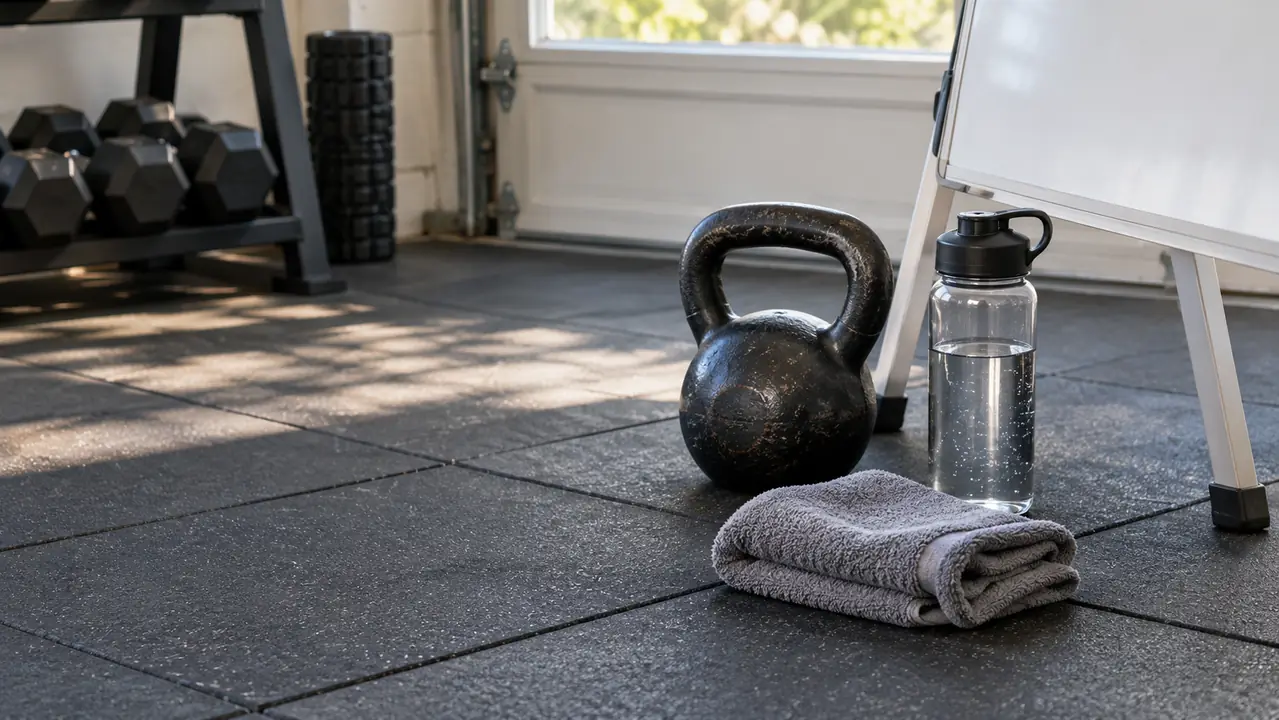
The warranty runs two years, and on an adjustable weight that matters more than on a fixed bell, because there is a mechanism inside that can wear. A cast iron kettlebell has no moving parts and needs no coverage. This one has a dial and a composite shell. That composite material is also the tradeoff: it is not a bell you drop on a concrete driveway. Set it down. If you tend to let go at the top of a swing, buy iron.
The dial makes partner work possible in a small group
On Saturday mornings, six of us share two bells. Because the weight changes with a dial, I can hand the same bell to a neighbor who needs 12 pounds and take it back at 25. Nobody sits out a round waiting for the right size. That sounds minor. It is the difference between a group workout that flows and one where five people stand around while one person finishes. It is genuinely easier to share than a fixed set.
The JRNY membership hands you a plan when you run out of ideas
The bell comes with two months of JRNY All-Access Membership, which gives you trainer led workouts you follow on a phone or tablet, including adaptive sessions. In a garage with a fan and a whiteboard, a plan is what keeps you from doing the same four moves forever. I write the Saturday circuit on the board, and I still use a follow along session on Tuesdays when nobody is here to tell me what to do. Two months is enough to find out if you like it.
What I'd Skip
Skip this bell if you already own a full set of cast iron and you lift heavy. The 40 pound ceiling will frustrate you inside a month. Skip it if your training space is a concrete driveway and you tend to release the bell at the top of a swing, because a composite shell does not enjoy that landing. And skip the habit of setting the weight in January and never touching the dial again. The whole value is in the changes. Twelve for presses, 25 for rows, 40 for swings, adjusted inside the same session. If you would rather have one fixed bell that never changes, buy the fixed bell and save yourself the dial.
The bell that changed my Saturday group was not the heaviest one in the garage. It was the one that adjusted in a few seconds, so nobody had to sit out a round.
Clear the wall of iron and put one bell on the tile
Eight to forty pounds, six settings, a 28 millimeter handle and a two year warranty. If your home workouts have stalled because the equipment got in the way, this is the shortest path back to showing up.
Amazon Check Today's Price on Amazon →