
Your hamstrings are talking to you. It is Tuesday afternoon, you did squats and a long walk on Sunday, and standing up from the kitchen table now comes with a small negotiation. Nothing is torn. Nothing is swollen. You are just sore, and it is the sort of sore that talks you out of Wednesday's workout, which is the part that actually costs you. I watch this happen in my garage most weeks. Someone pushes hard on Thursday, feels wrecked on Friday, and skips the one easy session that would have loosened everything back up. The answer is not more rest, and it is not stretching harder. It is a few slow minutes on a foam roller, done in the right order.
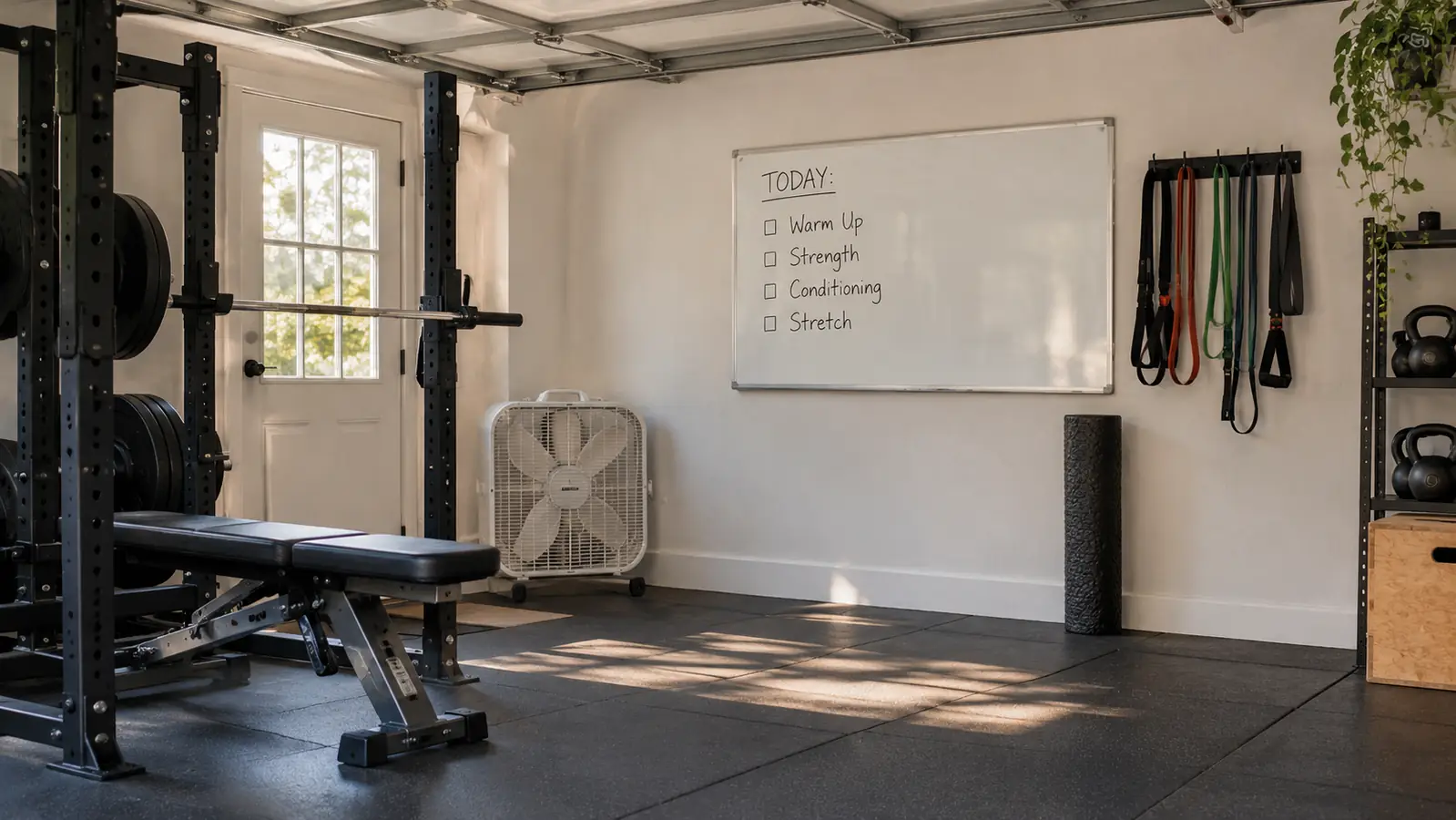
The roller I keep leaning against the wall next to my whiteboard is the TRIGGERPOINT GRID 1.0. It is 13 inches long, 1.1 pounds, and extra firm, and it has a three-dimensional surface of ridges and nodules instead of one smooth tube of foam. That matters more than it sounds. A smooth roller gives you one pressure level, and you either tolerate it or you don't. The GRID's Distrodensity Zones spread that pressure unevenly, so the firmer ridges do the work on the thick part of a quad while the recessed areas go easier on the tender spots. You get a rolling session you can actually finish instead of one you survive for thirty seconds. I have used it on my own legs and on Ray's, and it is still the roller I reach for.
Sore Today Doesn't Have to Mean Skipping Tomorrow
The TRIGGERPOINT GRID 1.0 is 13 inches, extra firm, and light enough to kick across the garage floor with one foot. It is the roller I use before and after every session in my Tulsa garage, and the one my Saturday group borrows when their legs are complaining.
Amazon Check Today's Price on Amazon →Step 1: Warm Up for Two Minutes Before You Roll
Skip this and the rest of the routine will feel like punishment. Cold tissue does not welcome sudden pressure, and the face people make in the first thirty seconds is exactly why most foam rollers end up under a bed. Take a lap around the block, do ten slow bodyweight squats, or swing your arms in circles for a minute. You are aiming for slightly warm, not winded.
I ignored this for years with my right shoulder. I would walk into the garage, drop onto the roller, and grind away at a shoulder that had not moved yet. It hurt, so I stopped, so it stayed tight for an entire training cycle. These days I do two minutes of arm circles and easy band rows first. Same roller, same shoulder, completely different experience. The warm-up is not a formality. It is the difference between a tool and a punishment.
A note on timing, since people ask me this constantly. I roll before a workout for about three minutes on whatever feels stiff, and after a workout for five to eight minutes on whatever did the work. If you only have room in your day for one, do the post-workout version. The pre-workout roll is a warm-up shortcut, not a recovery session, and it works best when you keep it light and quick. One February morning my garage thermometer read 41 degrees and I rolled anyway because I was running late. Twenty minutes later my right calf was still tight and my mood was worse than when I started. Now there is a cheap thermometer on the wall next to the whiteboard, and I wait until it clears 55 before I take my hoodie off.
Step 2: Roll the Big Movers Before the Small Ones
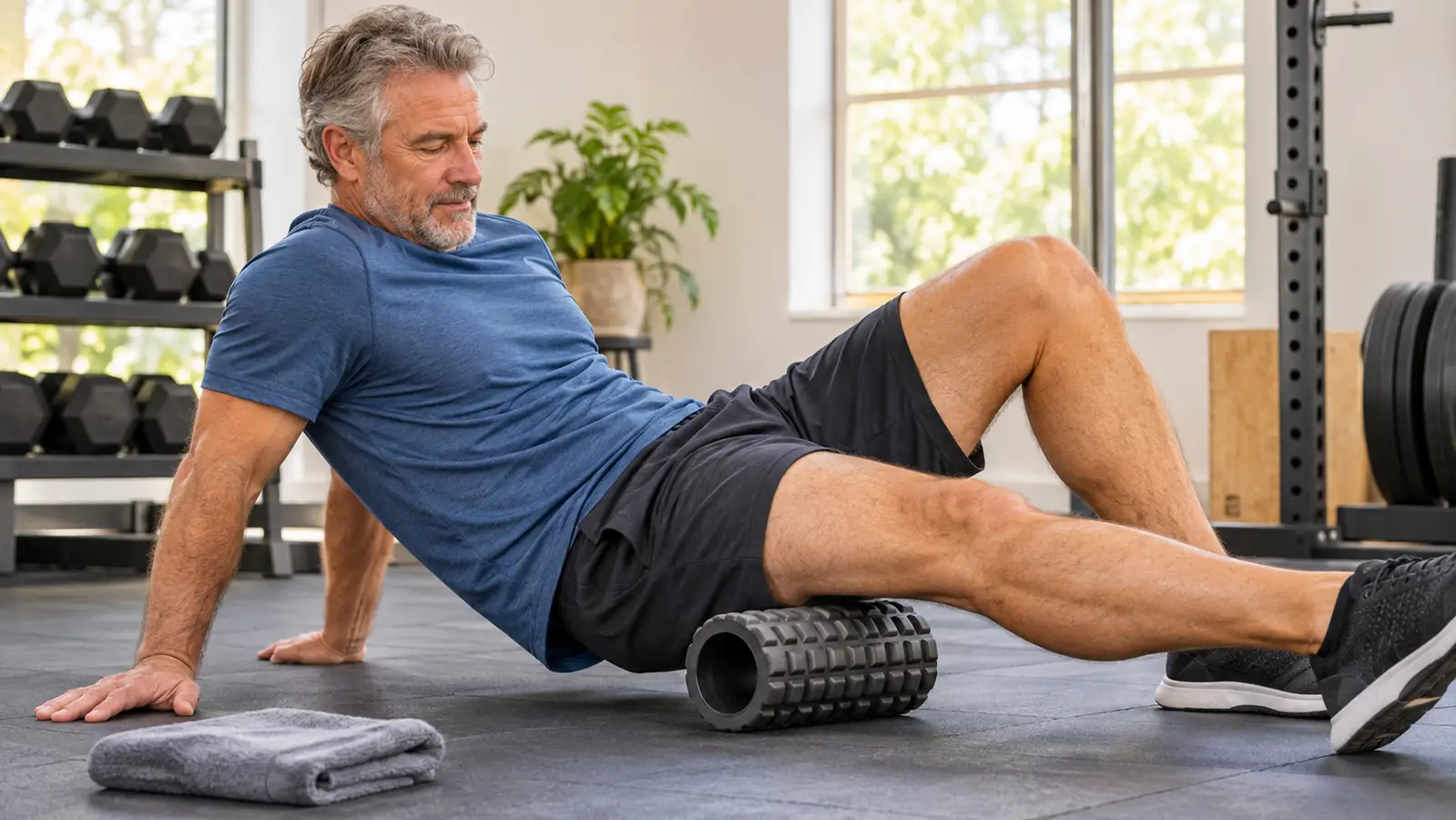
Start where the work happened. After a leg day that means quads, hamstrings, glutes and calves, in that order, one leg at a time. After an upper body day it means lats and mid back first, because those are the muscles that carried the load. Leave the lower back alone. Rolling directly over the lumbar spine is uncomfortable for most people I coach, and it is rarely the tissue that is actually tight. If your lower back feels locked, the tightness usually lives in your glutes and hips.
The other spot I steer people away from is rolling straight down the outside of the leg. That band of tissue does not respond to pressure the way a muscle does. Roll the meaty part of the outer quad and the glute above it instead, and you get the same relief without the bruising. I learned that from a massage therapist who watched me grind down the side of my leg for a full minute and gently told me to stop. The TRIGGERPOINT GRID handles this well, because you can lay the flatter sections along the length of a muscle and let the ridges work across it when you rotate slightly.
The 13 inch length is a nice middle ground here. A long roller covers more ground but gets clumsy when you are trying to isolate a single quad, and the very short ones force you to balance the whole time. At 13 inches I can work one hamstring at a time and still fit both calves on it side by side. That matters at the end of a session, when you are tired and your coordination is not at its best.
Step 3: Slow Down to About an Inch per Second
The most common mistake I see is speed. People roll up and down a quad like they are rolling out pie dough, then announce that foam rolling does not work. Your nervous system needs a good twenty to thirty seconds of steady pressure before it decides that tissue can soften. Fast rolling is just friction with extra laundry.
So pick a spot, settle about half your body weight onto it, and move at roughly an inch per second. That is slower than feels natural. When you hit something that makes you wince, stop on it and stay there. The ridges and nodules on the GRID will find those spots for you, which is both useful and slightly rude. Twenty seconds of staying put does more than two minutes of gliding over the top of it.
It helps to have a plan before you start. I pick two or three spots, not ten. Rolling everything for forty minutes is its own kind of overtraining, and the people who do it are the ones who quit by February. Five focused minutes on the two muscles that actually hurt is a routine you can repeat on Wednesday, and repeating it is the whole point. I write those two spots on the whiteboard before I start, which sounds fussy and takes about four seconds. Left quad, right glute. Then I cannot talk myself into wandering. When those two are done I stop, even if my calves are whispering for attention.
Twenty seconds of staying still on one tender spot does more for me than two minutes of rolling up and down the whole leg.
Step 4: Breathe Through the Tender Spots Instead of Bracing
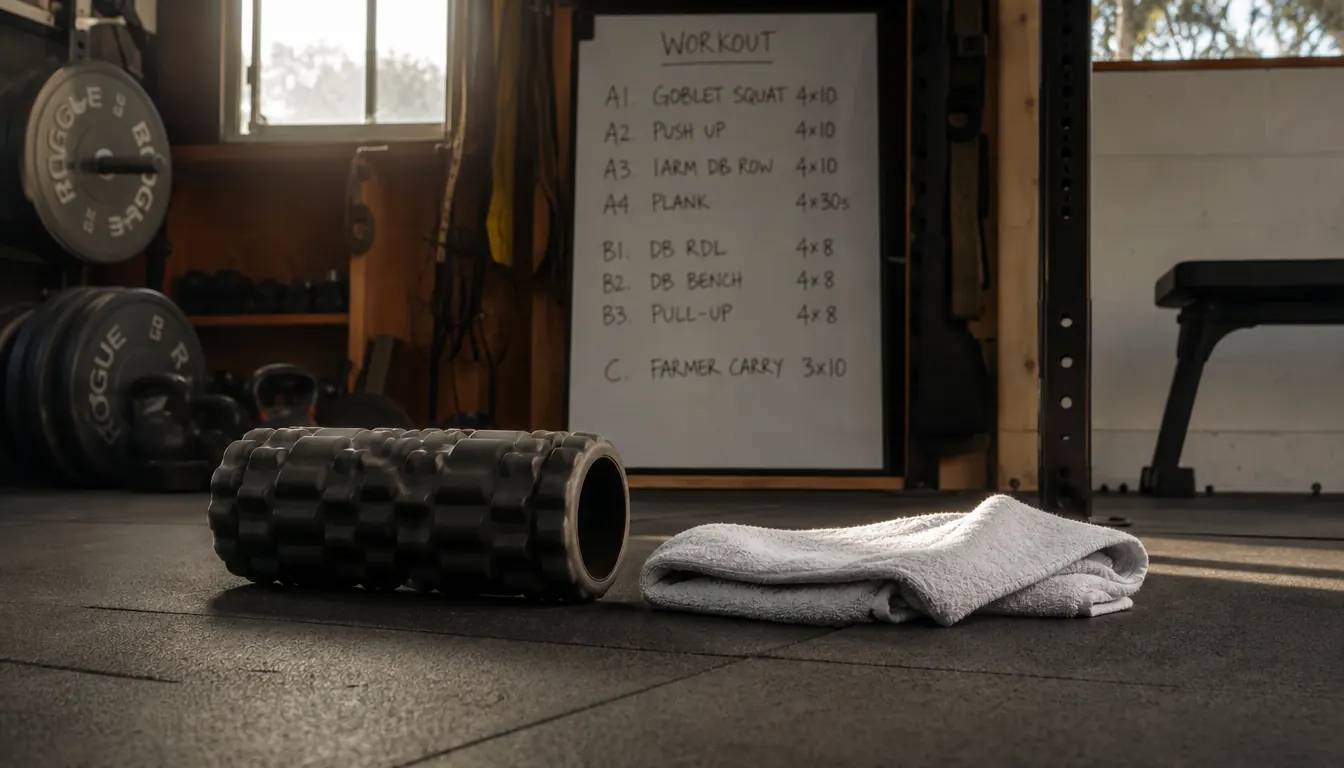
When something hurts, the instinct is to hold your breath and tense everything. That is exactly backwards. Bracing tightens the tissue you are trying to convince to let go, and it turns a thirty second job into a five minute fight. Breathe out slowly as you settle onto a tender spot. Let your shoulders drop. Let your jaw unclench.
I say this to my Saturday group so often that they finish the sentence for me. The tell is easy to spot from across the garage: someone holding a plank over the roller with their whole body rigid, not breathing, staring at the ceiling. If that is you, come off, shake out the leg, and start again slowly. Rolling should feel like a firm conversation, not an argument.
The other bracing move I see is the death grip on the floor. If your hands are pushing hard enough to turn your knuckles white, you are holding most of your weight off the roller and getting very little out of the session. Let your body weight settle, use your hands for balance rather than support, and the pressure will be there without you forcing it.
Step 5: Finish With Movement, Not More Pressure
The last two minutes matter more than people expect. Do not go from the roller straight to the couch. Stand up, walk a slow lap around the garage, do five or six easy bodyweight squats, and take your shoulder through a full circle. You have just spent five minutes telling your nervous system that a range of motion is safe. Now use it while the message is fresh. I learned that the hard way on a Tuesday, when I rolled for eight minutes and then sat in a folding chair answering email for an hour. By dinner my hamstrings were right back where they started, and I had to do the whole thing again.
My husband Ray has a bad left knee, and this is the step he skipped for months. He would roll, feel better, then sit in his recliner for an hour and wonder why the improvement vanished. Now he rolls, walks a lap around the driveway, and does a few step-ups on the bottom stair. His knee is not fixed, because a foam roller is not a fix, but the stiffness after Saturday sessions is noticeably less than it used to be.
If you are rolling in a garage like I am, the floor matters. I have rubber tiles, and a roller grips them well enough that I can push through a hamstring without it shooting out from under me. On smooth concrete, put a yoga mat or a thin rug down first. Chasing a roller across the garage is a great way to lose the habit before it starts.
What Else Helps
Rolling is one piece of a recovery routine, not the whole thing, and the boring pieces do most of the work. Sleep is the biggest one. There is no roller that outruns a five hour night. Ray and I both notice it: a decent night and his left knee is quiet on Sunday morning, a short one and he feels every step of the driveway warm-up. Water and a normal amount of protein at your next meal matter more than any gadget on the shelf. An easy walk on your off day moves blood through sore legs better than sitting still does. If a muscle is genuinely painful rather than sore, hot and swollen, or still complaining after several days, that is a conversation for a doctor and not a foam roller.
Heat before, movement after. In the winter my garage is cold enough that I wear a hoodie for the first ten minutes, and I roll after the room has warmed up rather than the second I walk in. Ten minutes with a heating pad on a tight calf before you roll beats twenty minutes of grinding on a cold one. It is not exciting advice, but it is the kind that makes a difference.
It also helps to be honest about volume. Most of the soreness I see in my garage comes from a jump in training, not from a missing recovery tool. If you go from two sessions a week to five because you feel motivated in January, you will be sore no matter what you own. Build the ramp slowly and use the roller on the days in between. That combination, modest increases plus a few slow minutes on the TRIGGERPOINT GRID, is what keeps the people in my Saturday group showing up in March instead of fading out by Valentine's Day.
Five Minutes Now Beats a Week of Stiffness Later
The GRID 1.0 is 13 inches, extra firm, and built for the muscles that complain after a leg day. Keep it by the wall, use it for five slow minutes, and get back to your training week.
Amazon Check Today's Price on Amazon →