
The Gaiam Essentials mat is the one almost everybody buys first. It sits in a stack by the door at every big-box store, it turns up in every beginner video, and it costs little enough that nobody agonizes over the decision for more than a minute. I bought two of them for my garage in Tulsa so the neighbors in my Saturday group would stop hauling their own mats through the rain.
Six months later, one of those mats has a soft crease down the middle and a lift at one end. The other is fine. Same mat, same floor, same six people standing on them. That difference is most of this review, honestly, and it tells you more about how the mat wears than any star rating will.
So here is the short version before the long one. The Gaiam Essentials is a genuinely good first mat for stretching, floor work and low-impact classes on a hard surface, and it is a frustrating mat for anything where you are standing on one leg and sweating. If you are 45 and starting over in a spare room, it will probably serve you well. If you are heading to a heated class, keep reading the part where I complain.
The Quick Verdict
Honest first mat. Real padding for knees, wrists and spine on concrete or tile, long enough for tall bodies, and forgiving enough to hand to a friend. Grip fades once your hands get damp, and it is too soft for standing balance work.
Amazon Check Today's Price →The mat my Saturday group reaches for before they reach for their own
Six months, six neighbors, one concrete garage floor. Two of these have covered the loaner pile without a single replacement, and the padding is the reason why.
Amazon Check Today's Price on Amazon →How I've Used This Mat
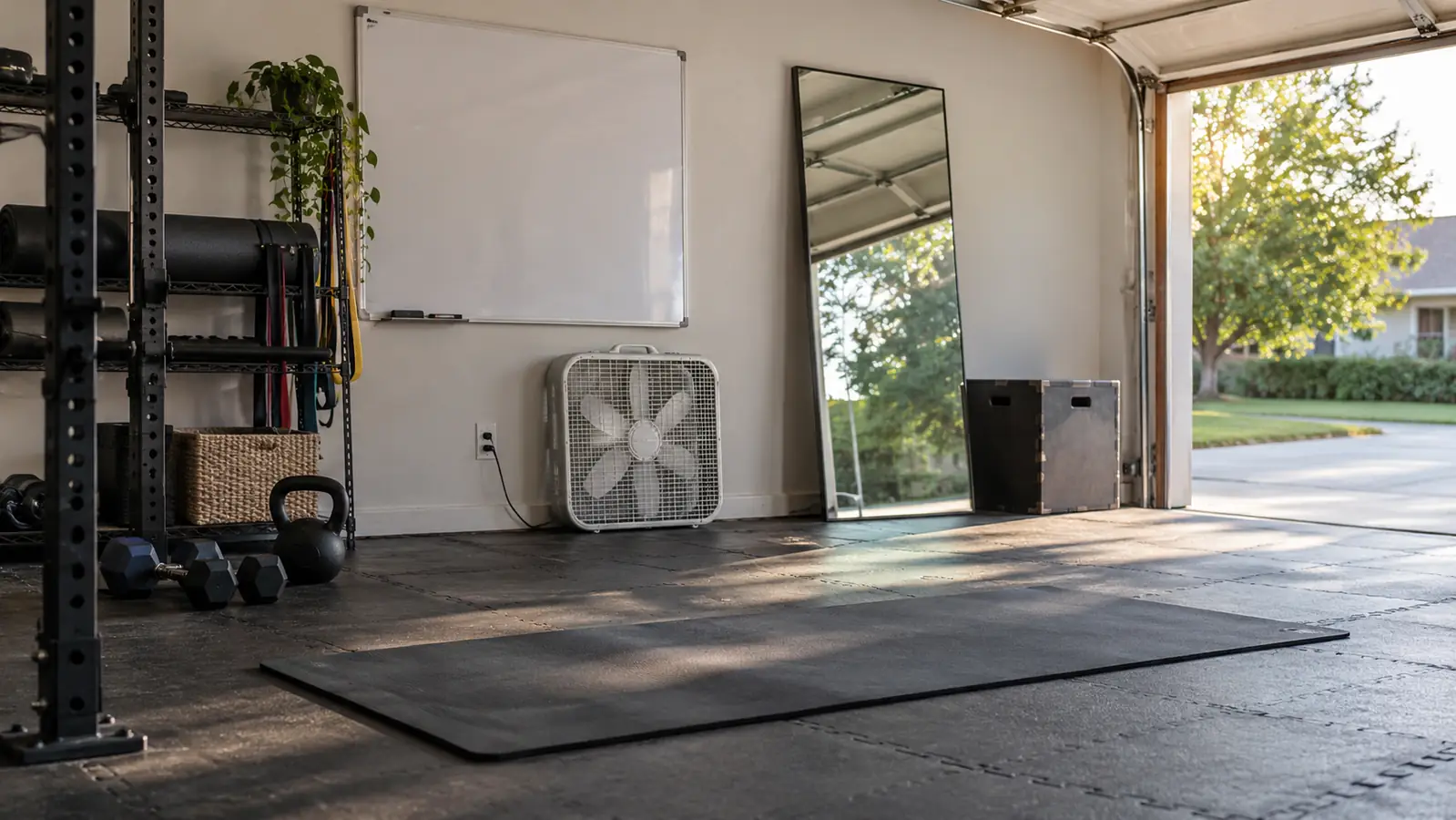
My gym is a converted one-car garage bay: rubber tiles over concrete, a box fan, a whiteboard and one wall mirror. Concrete under rubber tile is not a forgiving surface, which makes it a fair place to test a quarter inch of foam. Every session I run starts on the floor, so the mat gets used for the first twenty minutes whether anyone planned on it or not.
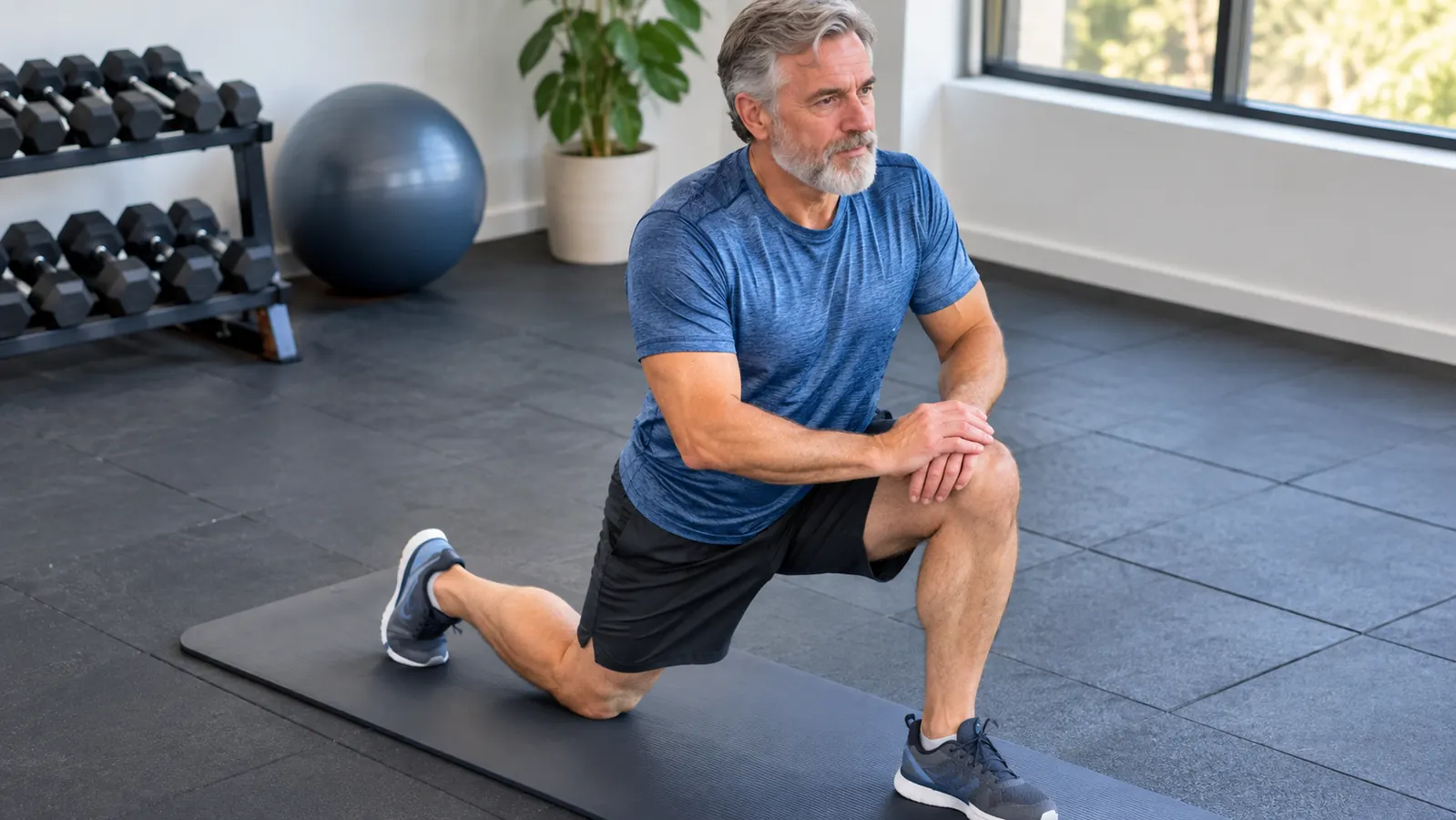
I keep one Gaiam Essentials for myself and one in the loaner pile. Over six months that pile has been through my Saturday group of about six neighbors, my husband Ray, and me. Ray is 58 and has a bad left knee, so I put him on the mat for every floor segment and asked him the same nosy question every week: does your knee complain? For the first month it did. By week five it mostly stopped, and I do not think that was the mat alone, but the mat stopped being the thing he noticed, which is the most I ever ask of a piece of equipment.
I also roll it out for my own warm-up, which is careful and slow because of an old right shoulder injury. Nothing about a mat fixes a shoulder. What I wanted was a surface that did not slide when I put a hand down, and this one held still on the rubber tile as long as my palm was dry. That caveat is doing a lot of work in that sentence and I will come back to it.
One thing about testing it with a group instead of alone: you find the weak spots faster. Six people means six different weights, six different sweat rates and six different ideas about how tightly a mat should be rolled before it goes back in the pile. A mat that only ever gets used by one careful person will look good for years. A mat that gets used by a group tells you the truth by week six.
What Nobody Tells You Before You Buy It
The length is the first thing people get wrong when they shop. The Gaiam Essentials is 72 inches long by 24 inches wide, which is longer than the standard mats most studios hand out. That matters if you are tall or if you like to lie flat with your arms overhead in a stretch. It also means the mat takes up more floor space in a small room and rolls into a fatter tube than you might picture when you order it.
The thickness is the second thing. Six millimeters is a quarter inch, and a quarter inch of foam-family material under your knees feels like considerably more than a quarter inch until it starts to compress. The material here is nitrile butadiene rubber, a synthetic foam rather than the natural rubber some people expect. That is not a knock. It just explains why the surface feels softer and less tacky than a rubber mat, and why there is a faint new-mat smell for the first week that fades if you air it out.
The third thing nobody mentions: the edge curl. This mat ships rolled and it wants to stay rolled. Mine took about a week of being laid out flat to stop lifting at the ends. The loaner mat, which gets cinched back into its strap after every single session, still lifts a little at one corner. If you leave it rolled in the car between classes, expect to spend the first minute of every practice pressing the ends down with your feet.
Where the 6mm Cushion Earns Its Place
I want to be fair to this mat, because the padding is real and it is the entire reason to buy it. Knees, wrists, hips and spine on hardwood, tile or carpet: that is what the listing promises and that is what it delivers. My group does a lot of kneeling work and a lot of seated stretching, and nobody has once asked for a folded blanket to put under their knees, which happens with thinner mats and always has.
Ray is the best evidence I have. He came to me with a knee that made him negotiate with every half-kneeling stretch. On bare rubber tile he would fold a towel. On the Gaiam Essentials he stopped folding the towel. That is not a medical outcome and I am not going to dress it up as one. It is one less complaint in a garage at seven in the morning, and for a guy who is not naturally enthusiastic about floor work, one less complaint is the whole ballgame.
The same padding that helps you on the floor works against you the moment you stand up. Standing balance work on a quarter inch of compressible foam is like balancing on a mattress. Your foot sinks, your ankle makes constant micro-corrections, and for a beginner that reads as I am bad at this rather than this surface is soft. I do my single-leg work on the bare tile now, and I move anyone in the group who is wobbling onto the tile too.
Ray stopped folding a towel under his knee by week five. That is the whole argument for six millimeters of padding, and it is a good argument.
Grip, Sweat and the Honest Limits of Sticky
The listing says the textured surface gives reliable traction. I would put it slightly differently: it gives reliable traction while you are dry. In a cool garage with a fan running and a low-impact class, my hands and feet did not slide at all. Add twenty minutes of effort and a little Oklahoma humidity and the surface gets slick in the spots you need it most, which for me is the ball of the foot in a lunge and the heel in a down dog.
There is a fix and it is not the mat's job. A hand towel and a water bottle solve most of it. So does slowing down. What does not solve it is expecting a quarter inch of synthetic foam to behave like a dense rubber mat built for a heated room. I have taught long enough to know that most grip complaints are sweat complaints wearing a costume, and this mat is a good enough value that I would rather tell you to bring a towel than tell you to spend more.
The texture itself has held up. Six months in, the surface has not gone shiny or started shedding, which is more than I can say for a plain foam exercise mat I tried in the same bay. That foam mat was fine for sit-ups and hopeless for anything where I needed a hand planted and pushing. The difference was not thickness. It was whether the surface had any texture at all.
What I Liked
- Six millimeters of padding that genuinely helps knees, wrists and spine on concrete, hardwood or tile
- 72 by 24 inches fits taller bodies comfortably from head to toe
- Light enough to carry one-handed with the included easy-cinch strap
- Surface has held up for six months of group use without going shiny or shedding
- Long and forgiving enough to work as a loaner mat for a small group
Where It Falls Short
- Grip drops off once hands and feet get damp
- Too soft for standing balance work
- Edge curl for the first week, and again if you store it rolled tight
- Faint new-mat smell that needs a few days of airing out
- Hand wash only, so it is not a hose-it-down-in-the-driveway kind of mat
How It Compares to a Basic Foam Exercise Mat
People ask me whether they can just use the cheap foam exercise mat they already own. It depends entirely on what they do with it. A plain foam mat is fine for crunches, forearm planks and seated stretching on carpet. It is not fine for anything where you plant a hand and push, because it slides across a hard floor and it compresses to nothing under a knee, which is exactly the complaint that sends most people shopping in the first place.
The Gaiam Essentials is not dramatically different in material. It is nitrile butadiene rubber, a synthetic foam, and at three pounds it is not a dense mat. What you are getting for the money is the combination: the 6mm thickness, the 72 by 24 size, the textured top, and a strap that actually works. A basic foam mat usually gets you one of those four things. This one gets you all of them in the same roll.
If you already own a foam mat and you only ever do floor work on carpet, stay where you are. If your mat slides across a hardwood floor every time you move, that is the specific problem this one solves, because the textured surface grips tile and hardwood in a way a smooth foam mat simply does not. That is the honest dividing line, and it has nothing to do with brand loyalty.
The Strap, the Roll and the Care Instructions
It comes with an easy-cinch carrier sling, and the sling is better than most. It wraps around the rolled mat, cinches with one pull, and the whole thing goes over a shoulder. At three pounds the mat is not a burden to carry, and this is the rare case where the included strap does not get thrown in a drawer within a week. My group borrows the strap as often as they borrow the mat.
The care instruction is hand wash only, which is worth knowing before you buy rather than after. This is not a mat you scrub with a hose in the driveway. Spot clean it with a damp cloth and mild soap, wipe it down, and let it dry completely before you roll it. Roll it damp and you will get a smell that no amount of airing out will fix, and I know that because I have made that mistake with other mats and regretted it.
The roll direction matters more than people expect. Roll it with the top surface facing out and it lies flatter next time you unroll it. Roll it tight and store it in a hot garage and the mat will remind you about it every single session. My own mat lives rolled loosely in a corner by the fan. The loaner lives cinched tight in its strap in a basket, and after six months you can tell the difference between them from across the room.
What Six Months Changed, and What Didn't
What changed is the edges. Both mats have a soft memory of being rolled, and the loaner has a permanent lift at one end that I press down with a foot at the start of every session. What did not change is the middle. No bald patches, no shedding, no crumbling at the corners, and no place where the surface has worn through to something slicker underneath.
What also changed is my opinion of the thickness. I started out thinking six millimeters was generous and ended up thinking it is the right amount for a hard floor and slightly too much for standing work. That is not a contradiction, it is the trade this mat makes. You cannot have a surface that is plush under a knee and firm under a foot, and any mat that claims otherwise is either thicker than it says or softer than it should be.
What I will be watching for in year two: the surface getting polished where hands and feet land most often, and that crease line down the middle of the loaner mat, which is where it folds every time it goes into the strap. Neither has become a problem yet. I will keep using both, and I will notice, which is more than I can say for the last mat I owned.
Who This Is For
You are the person this mat was built for if you are starting or restarting at home, working on a hard floor, and doing stretching, floor work, gentle yoga or a low-impact class. You want your knees and wrists to stop complaining and you do not want to think about your mat again for a year. You probably also want something you can hand to a friend without wincing at the state of it.
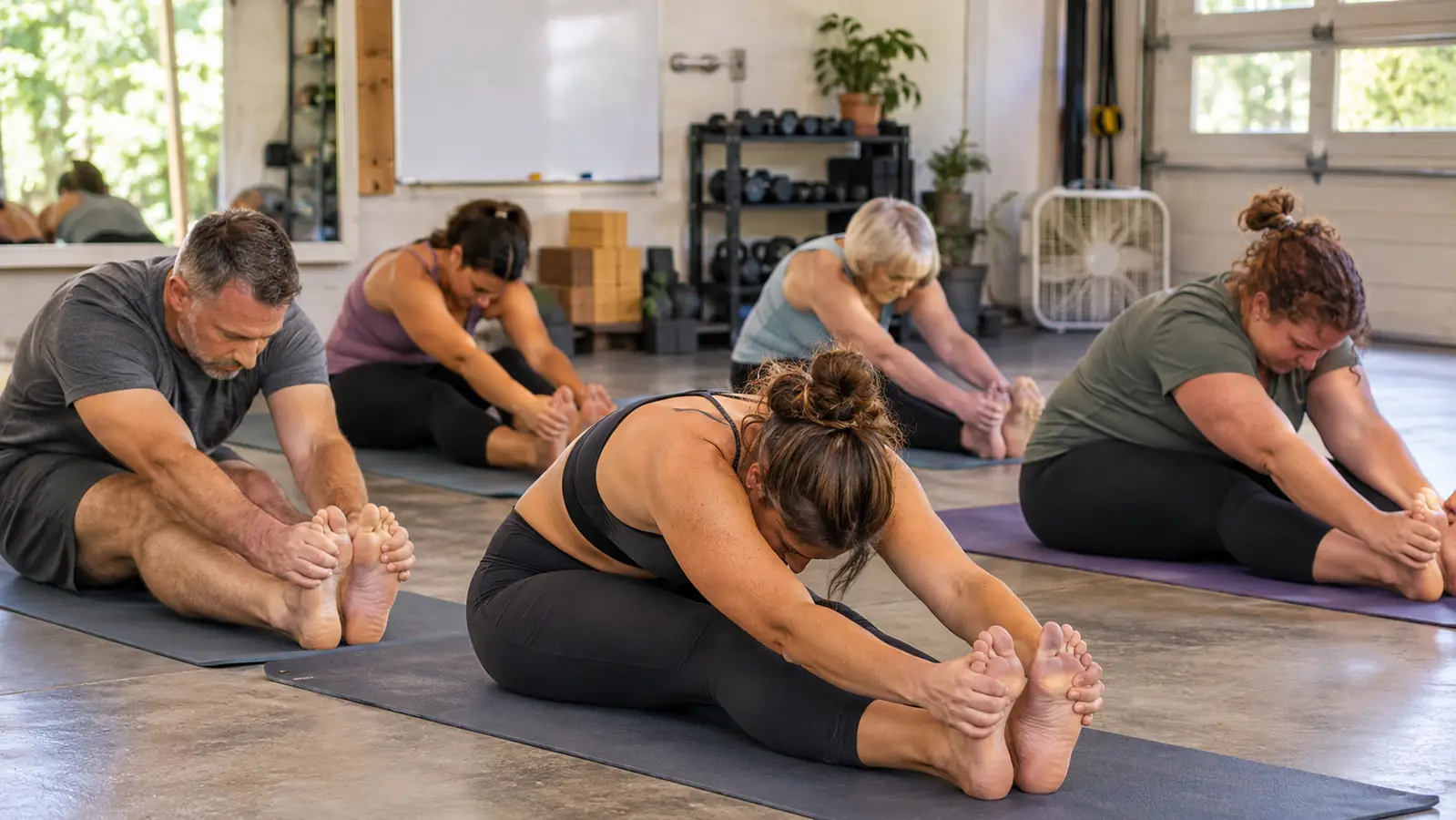
It is also a good group mat. My Saturday group is six adults between 40 and 65, most of them beginners, all of them working in a garage with a box fan and a whiteboard. Two of these mats have covered the loaner situation for six months and I have not had to replace either one. That is a real recommendation, even if it is not the glamorous kind you see in a fitness video.
And it is a fine choice if you are buying your first mat and you genuinely do not know yet what kind of practice you will end up with. This mat is forgiving in both senses: it is kind to your joints, and it does not punish you for buying the wrong thing while you figure out what you like. That is worth more than a spec sheet makes it sound.
Who Should Skip It
Skip it if you sweat hard and need grip that survives it, or if you practice in a heated room. Skip it if a lot of your work is standing on one leg, because the padding will fight you and you will blame yourself instead of the surface. Skip it if you want a mat you can wipe down with a hose, since this one is hand wash only and means it.
And skip it if you already know you like a thinner, firmer mat. Some people find that a quarter inch under a standing pose feels unstable and they never stop noticing it, and no number of good reviews will change that. The honest answer is that no single mat suits every body. This one is soft where it should be soft and soft where it should be firm, and knowing which of those you can live with is the whole decision.
If your knees are the reason you skip floor work, start here
Six months, six neighbors, one concrete garage floor, two mats still in service. The Gaiam Essentials is the one I reach for when the session starts on the ground, and the one I would hand a friend who is starting over.
Amazon Check Today's Price on Amazon →