
Here is the short answer, because you probably landed here with a sore back and no patience for a long story. If you want one mat you can unroll for stretching, yoga, Pilates and floor work, then roll up and lean against the wall, buy the Gaiam Essentials. If you want to cover a patch of hard floor for good so you can lift in shoes, set down a dumbbell and stop thinking about it, buy a foam exercise mat. Those are two different jobs, and expecting one piece of gear to do both is how people end up with a mat they quietly resent.
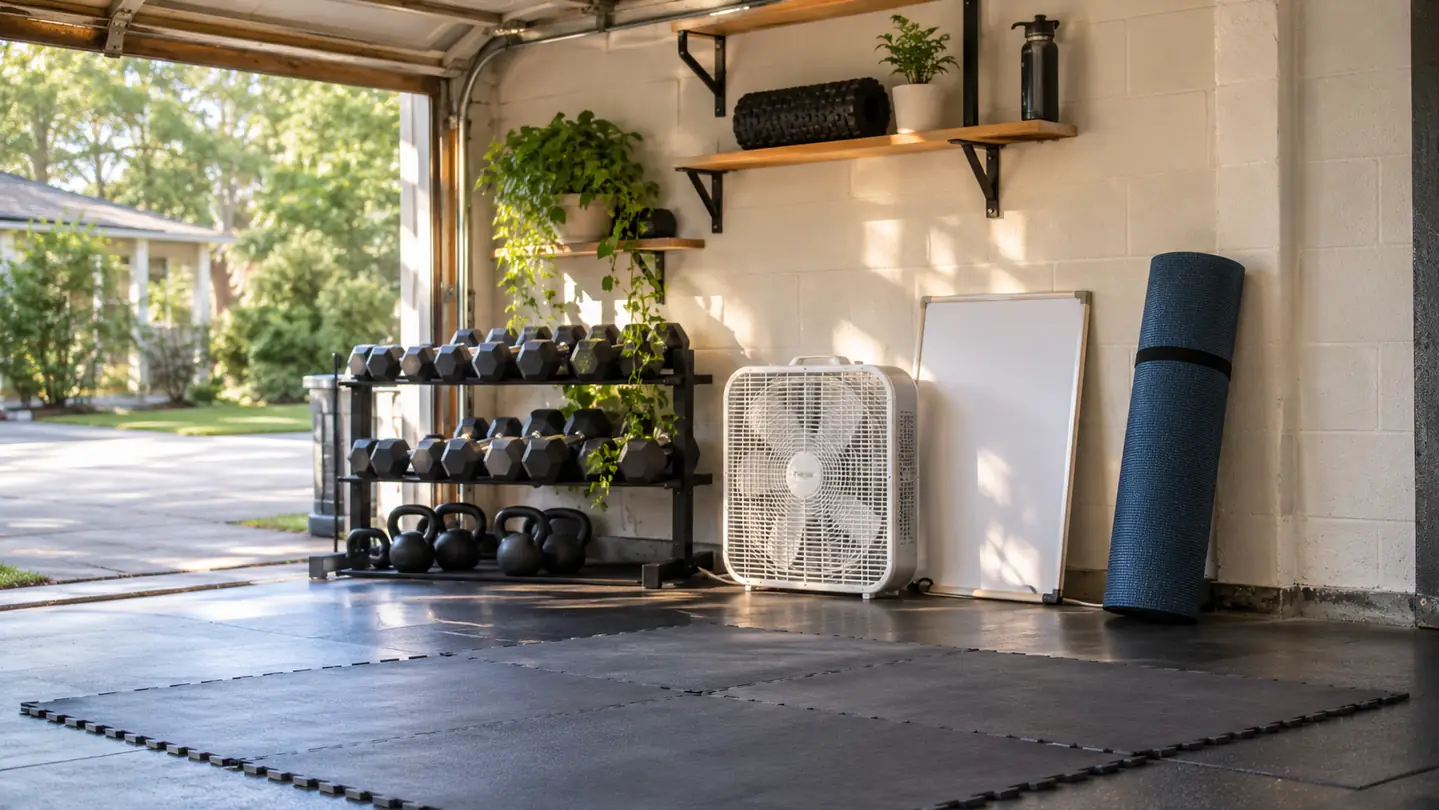
I keep both in the same place: a converted one-car garage bay in Tulsa with rubber floor tiles, a box fan, a whiteboard and one wall mirror. My husband Ray is 58 and has a left knee that files complaints, and he trains with me twice a week. About six neighbors come over on Saturday morning. Every one of them has stepped on both surfaces, and they say so out loud, which is the most honest testing process I know.
| Gaiam Essentials | Foam exercise mat | |
|---|---|---|
| Traction | Sticky, textured top that holds bare hands and feet even when you are damp | Smooth foam turns slick once you start to sweat |
| Cushioning | A quarter inch (6mm) of padding over a hard floor | Usually half an inch or more, so it swallows impact |
| Footprint | One 72 x 24 inch mat you place and pick up | Snaps together to cover a whole corner and stays down |
| Packing down | Rolls up with an easy-cinch carrier sling | Pulls apart into tiles you stack in a closet |
| Shoes and weights | Barefoot work; shoes and dropped weights chew at the surface | Takes shoes, dumbbells and a dragged bench without complaint |
| Balance poses | Firm enough that you can feel your footing | Squishy enough to make a one-leg pose wobble |
| Cleaning | Hand wash only, then air dry | Wipe with a damp cloth |
| Best for | Yoga, Pilates, stretching, floor work | Lifting, cardio in shoes, protecting hard floor |
How These Two Ended Up in the Same Garage
The Gaiam Essentials came first. I wanted something I could carry out to the driveway on a nice morning and something that would not slide out from under my hands during a plank. What arrived was a 72 by 24 inch mat, a quarter inch thick, with a textured top and a cinch strap for rolling it up. It lives rolled in the corner behind the fan and comes out four or five times a week, which is more than I can say for most of the gear in that garage.
The foam tiles came second, and for a boring reason. Half of my Saturday group lifts in shoes, and shoes on a yoga mat are a bad marriage. So I bought a pack of interlocking tiles and laid them over the concrete end of the bay. Now the floor has two zones and everybody knows which one they belong on without being told. That split is the whole comparison in miniature, and it is why I do not think of these as rivals.
What Each One Actually Is
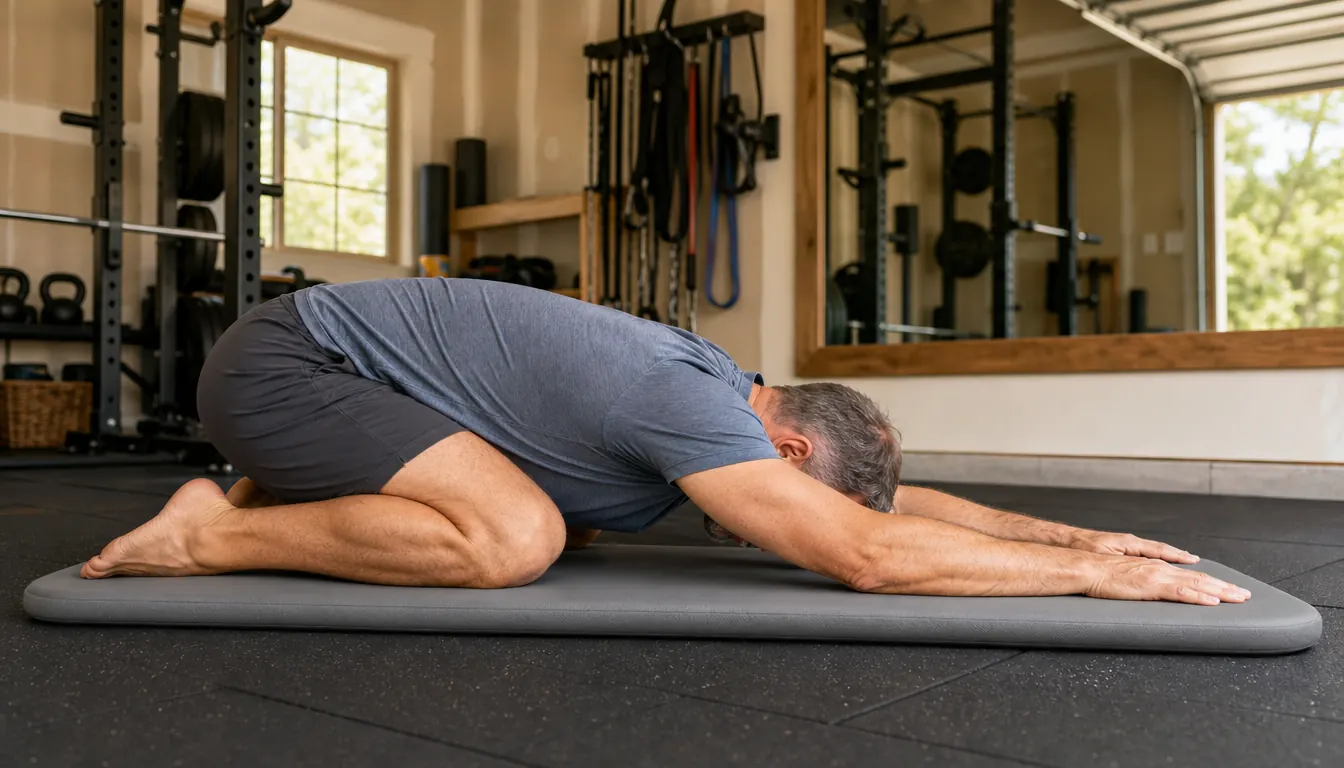
The Gaiam Essentials is a yoga and Pilates mat, not a gym floor. The listing puts it at 72 inches long, 24 inches wide and a quarter inch thick, which is the same thing as the 6mm in the title. The material is nitrile butadiene rubber with a sticky, textured surface, and Gaiam says the padding is there for knees, wrists, hips and spine on hardwood, tile or carpet. Care instructions say hand wash only. Mine came with the easy-cinch carrier sling, and yes, I actually use it instead of wadding the mat under my arm.
A foam exercise mat is the interlocking tile kind. The edges are cut like puzzle pieces, you buy them in a pack, and you snap them into a rectangle over whatever floor you are stuck with. They are thicker than a yoga mat, they are designed to stay down, and they are designed to take shoes. Nobody does a sun salutation on one on purpose. They exist so a hard floor stops winning every argument with your spine.
Where Gaiam Essentials Wins
Traction is the reason this mat has a permanent spot in my garage. My floor is rubber tile, and rubber on rubber still gets slick once your hands are damp. On the Gaiam, my hands stay where I plant them in a plank and my feet hold in warrior two. One of my Saturday group wears socks for the entire session, and even she stops sliding. Smooth foam gives you none of that. Get a little sweat on an EVA tile and you will feel a heel go out from under you, usually at the worst possible moment.
The second win is that it disappears. It rolls, the strap holds it, and it leans in the corner. When your gym is also where you park a car, that matters more than any line on a listing. The length earns its keep too. At 5 foot 4 I have room to spare, and Ray at just over six feet does not hang off the end during a reclined stretch. Foam tiles do not roll up. You stack them, and a stack of tiles is not the same thing as a mat in a sling.
My hands stay where I plant them in a plank and my feet hold in warrior two. That is the entire argument for this mat.
Where the Foam Exercise Mat Wins
Now the honest half. Four foam tiles cover more floor than one mat ever will, and they cover it permanently, so you can stand wide for a sumo deadlift without half a foot slipping onto bare concrete. They are also softer. A quarter inch of nitrile rubber is support, not a cloud. If you are bony through the spine and you do a lot of work on your back, the thicker foam surface is kinder, and I will not pretend a yoga mat is the same thing. On the days Ray's knee is angry, he heads straight for the tiles.
Foam also does not care what you wear. Shoes on, shoes off, a dropped dumbbell, a bench dragged across it, all fine. Drag that same bench across a yoga mat and you will leave a scar you cannot unsee. Cleanup is a wipe with a damp cloth. The Gaiam says hand wash only, which means a session with the hose, a mat draped over the fence to dry, and a wait. In an Oklahoma July that takes an afternoon. In January it takes the rest of the week.
The mat that stays put when your hands are sweating
This is the one I unroll for stretching, Pilates and floor work in my garage. 72 by 24 inches, a quarter inch thick, sticky textured top, cinch strap included. It rolls up and disappears when the session is over.
Amazon Check Today's Price on Amazon →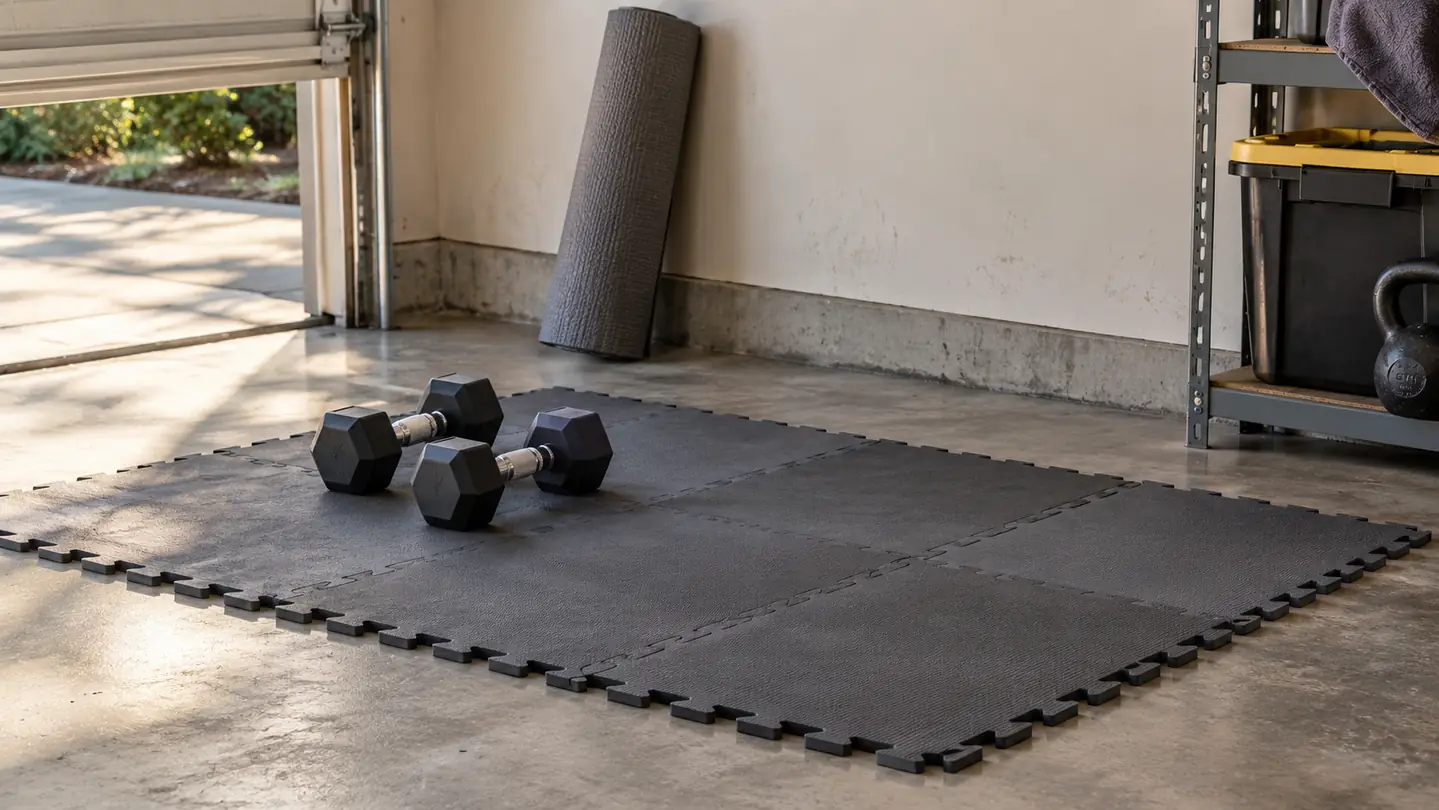
How Both Held Up in My Garage
My garage gets hot. By 9am in August the fan is doing nothing and everybody is leaving handprints on everything. The Gaiam has handled that without going tacky or peeling, and it dries flat as long as I hang it properly instead of folding it over a chair. The foam tiles have handled it too, though the seams where they meet the concrete collect grit that I have to vacuum out about once a month. Neither surface has failed. They just age in different directions, and only one of them can be carried to the driveway.
Ray's knee is the real test. He is 58, his left knee has opinions, and he will not do lunges on a hard surface. He does them on the foam and he is fine. My right shoulder is the old injury in this house, so I warm it up carefully, which means a lot of time on my back with a band. That work happens on the Gaiam, because I need to feel the floor through the mat. Give me too much squish and I lose track of where my shoulder blade is, and then the warm-up is not a warm-up anymore.
After months of this, both surfaces are still doing their jobs. The mat has a crease where it always rolls, which is normal and affects nothing. The tiles have a scuff where the bench sits. If you want gear that looks new forever, neither of these is that. If you want gear that keeps working, both are, and the total cost of owning the pair is less than one piece of equipment you would use half as often.
Sizing and Space: What Actually Fits
Measure before you buy either one. A 72 by 24 inch mat wants a clear rectangle six feet long and two feet wide, plus a little elbow room on each side if you are doing anything with arms out. On a rubber-tiled garage floor it sits nicely in front of a mirror. It does not want to be half on a mat and half on concrete, because that edge catches your heel every single time you step across it.
Foam tiles are more forgiving in an awkward space because you can arrange them around a post or a step. A common pack covers a square roughly four tiles by four, which is a real training area and not a yoga mat pretending to be one. The trade is that they need a clean, dry, flat floor to sit properly. Lay them over a rough slab and the seams will work apart every time you shift your weight.
The Mistake I See Most
People buy foam tiles thinking they have bought a yoga mat. They lay them down, get onto the floor for a stretch, and then try something on hands and feet and their hands slide forward. Then they blame the tiles. The tiles did exactly what they were built to do. They are a floor, not a surface for bare hands and feet, and no amount of wishing changes that.
The other mistake is the reverse: buying a thin mat and expecting it to protect a slab while you deadlift in shoes. A quarter inch of rubber is not a platform. It will not take a dropped dumbbell and it will not survive a bench being dragged across it. Buy the right one for the job, or buy both if your training genuinely splits. That second option is not a cop-out. It is what my garage looks like, and it ended a lot of small irritations.
What I Liked
- Sticky, textured top holds bare hands and feet even when you are damp
- 72 by 24 inches gives taller users room from head to toe
- A quarter inch (6mm) of padding takes the edge off a hard floor
- Rolls up with a cinch strap and leans in a corner out of the way
- Light enough to carry out to the driveway on a nice morning
Where It Falls Short
- Hand wash only, and it takes a while to dry in cold weather
- A quarter inch is support, not deep cushion for a bony spine
- Not built for shoes, dropped weights or a dragged bench
- Covers one person's footprint and nothing more
Who Should Buy Which
Buy the Gaiam Essentials if your work is barefoot and floor based. Yoga, Pilates, stretching, mobility, core work, a little light dumbbell work where you never leave the mat. Buy it if your gym shares space with a car and has to pack down in under a minute. Buy it if sliding hands are the thing that annoys you most, because that is the exact problem it solves. The sticky top and the 72 inch length are the two features doing the real work, and both show up the first time you use it.
Buy a foam exercise mat instead if you train in shoes, if you lift, if you want a permanent footprint, or if a hard floor is the reason your back hurts during floor work. And if you are the household where one person does yoga and the other does deadlifts, do what I did. Two zones, one garage, no argument about whose surface it is. On Saturday morning my group spreads across both without a second thought, and nobody has ever asked me which one is better.
One mat, one corner, done
Quarter inch of padding, a sticky top and a strap to roll it up with. If your workouts happen barefoot on a hard floor, this is the surface that stops the sliding and goes back in the corner when you are finished.
Amazon Check Today's Price on Amazon →