
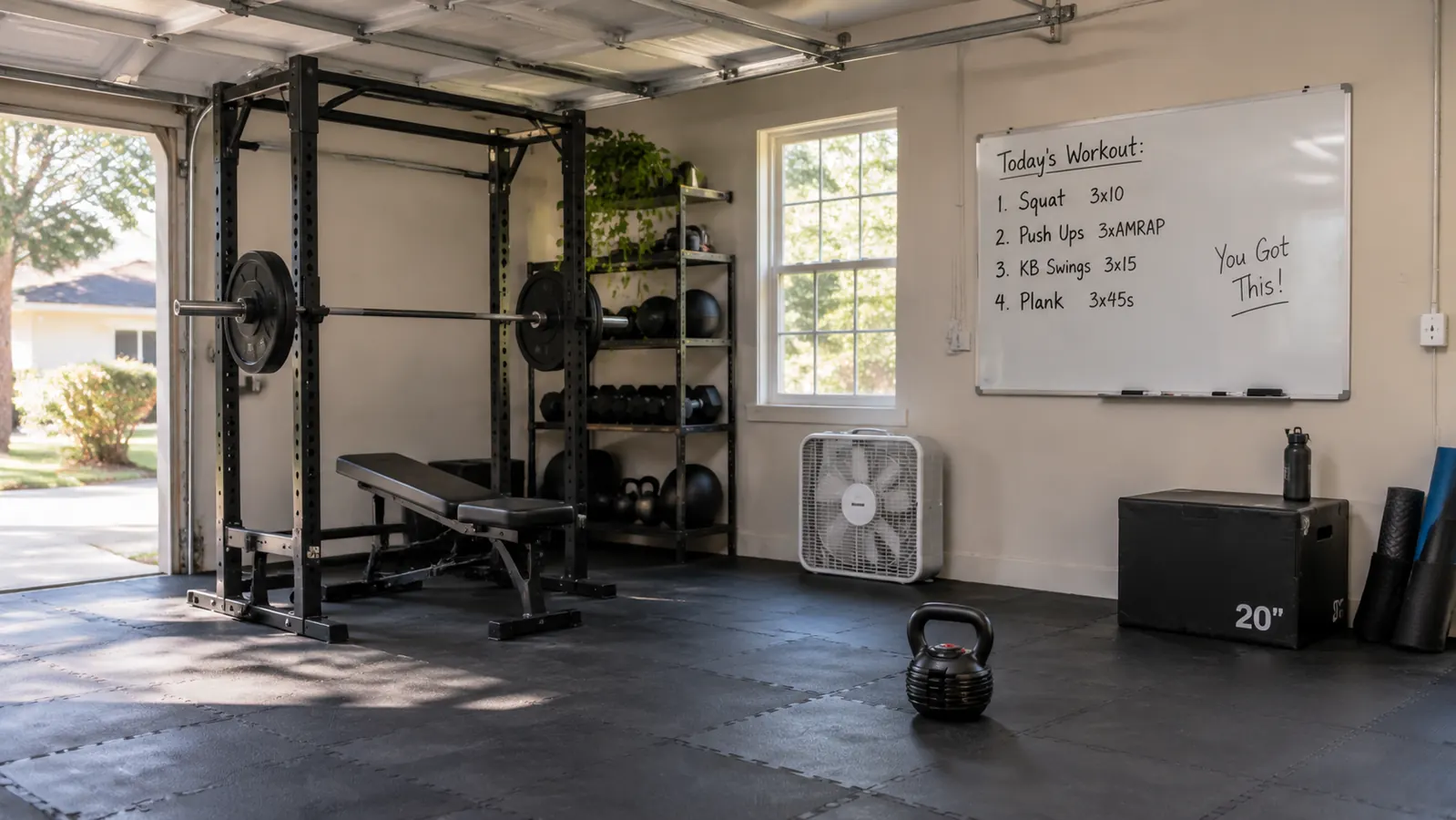
I keep the week's workouts on a whiteboard in my garage gym, and for about two years the bottom line of that board said the same thing. Swings. I owned two cast iron kettlebells and I used one of them, because the other sat at 35 pounds and lifting it off the floor felt like a decision instead of a warmup. In March I moved both bells to a shelf and put a Bowflex SelectTech 840 in the corner instead. I have now run it through three months of Saturday group workouts, a left knee that belongs to my husband Ray, and one shoulder of my own that I warm up carefully because of an old injury. My opinion of it is not the opinion I expected to have in week one.
Short version first. The 840 is a solid adjustable kettlebell and it is also a compromise in three specific places that the product listing does not put in bold. Nobody mentions those places before you buy, which is why I want them on the table early. I coach six neighbors out of this garage on Saturday mornings, and I have watched five of them pick this thing up and form an instant opinion, so I have a decent sample of reactions to work from.
The Quick Verdict
One dial replaces six kettlebells from 8 to 40 pounds and gives you back a corner of the garage. The housing sits bulky in the rack position, it is not a bell you drop, and the jump from 25 to 35 pounds is steep. Buy it for range and floor space, not for the feel of cast iron.
Amazon Check Today's Price →Six Weights, One Dial, One Corner of the Garage
The 840 adjusts from 8 to 40 pounds without a rack of bells behind it. Check the current listing for today's price and the full weight range.
Amazon Check Today's Price on Amazon →The Thing Nobody Says Out Loud About Adjustable Kettlebells
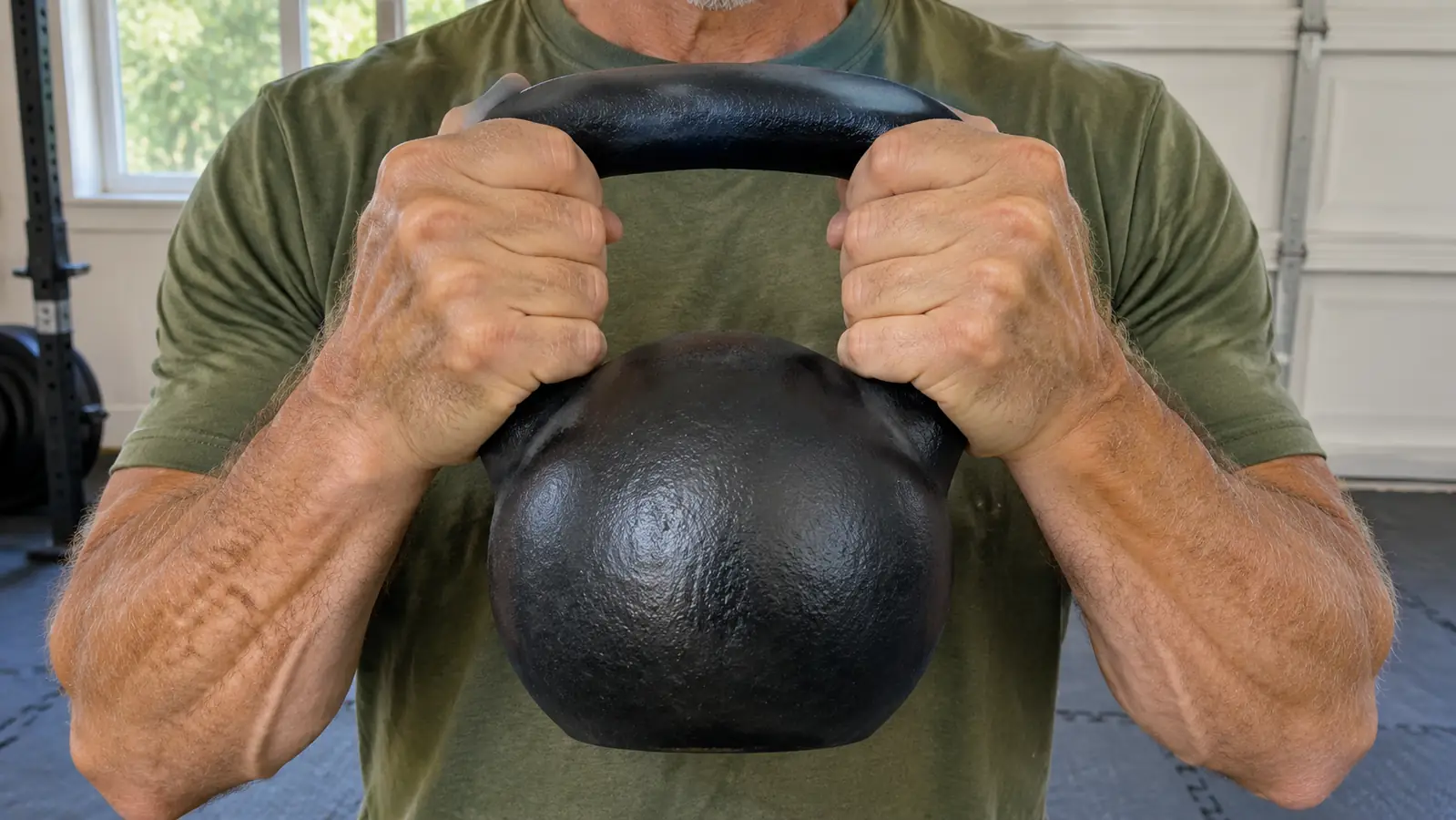
An adjustable kettlebell is a convenience product, not a precision one, and the sooner you accept that the happier you will be. A cast iron bell is a single lump of metal with a handle attached. The 840 is a composite housing that holds adjustable weight, which means it is a container first and a kettlebell second. You feel that in two places. In the rack position, where the housing rests against your forearm and sits further out from your wrist than any cast iron bell I have owned. And at the top of a set, when your grip is tired and you are thinking about how nice it would be to simply let go.
That second part is the tradeoff nobody talks about. Kettlebell training and dropping the bell at the end of a hard set go together in a lot of people's heads, and this is not a bell you drop. Mine sits on rubber tiles over concrete, and I set it down every single time, deliberately, like I am putting down a full cup of coffee. If dropping the weight is part of how you train, no adjustable bell will make you happy and the Bowflex is no exception. What it gives you instead is six bells worth of range in a footprint of roughly nine inches by seven, which in a one car garage is the whole argument.
How the 840 Ended Up in My Garage
My garage is a converted one car bay with rubber floor tiles, a box fan, a whiteboard and one wall mirror. Space is the entire story in a room that size, and my old arrangement was two bells parked by the door because there was nowhere else to put them. The 840 replaced both and left me a corner. That sounds small until you are the one stepping around a kettlebell to get to the fan. The dial is the reason it works. I turn it to the weight I want, pick the bell up, and go.
On Saturdays my group runs a circuit heavy on hinge work, and the 840 gets used at four different weights inside forty minutes. Warmup halos at 8 pounds. Goblet squats at 20. Rows at 25. Swings at 35 for anyone who has earned it. Changing load between stations without walking to a rack is the reason this thing earns its floor space. When I coached with two fixed bells, half the group did the row station with whatever weight happened to be closest, which was usually wrong for them in one direction or the other.
Before the 840 arrived I tried a cheap wire rack in the corner, the kind that holds three bells in a row, and it lasted about two weeks. The rack itself was fine. The problem was that it pushed the bells out from the wall about eighteen inches, and eighteen inches is the difference between a clear path to the fan and a bruise on your shin every Saturday. I measured the corner with a tape measure, wrote the number on the whiteboard, and started looking for something that would fit inside it. The 840 slid into that gap with room to spare. The rack went to the curb the following weekend and I have not missed it. That measuring tape moment is the one I would repeat to anybody with a small room: write down the actual number before you shop, because small and eighteen inches are not the same conversation.
Six kettlebells worth of range now lives in a patch of floor about nine inches by seven.
The Dial, the Six Weights, and the Gap in the Middle
The settings are 8, 12, 20, 25, 35 and 40 pounds. Six bells, one dial, and the honest problem is the spacing. From 12 to 20 is an eight pound jump. From 25 to 35 is ten. For swings and deadlifts that is fine, because a big lower body movement tolerates a bigger jump. For overhead pressing or single arm rows, a ten pound jump is where form goes to die, especially for a beginner or anyone coming back from time off. I ended up using the 25 for almost everything upper body and treating the 35 as a swing-only weight.
I found the gap the hard way on a Tuesday in April. I was pressing a single arm with the 20 and it had gotten easy, so I turned the dial to 35 and got exactly two reps on the right side before my shoulder started talking to me. The left side managed four, which is not a strength problem, it is a loading problem. What I did instead was spend three weeks at 20 pounds with a slow three second lowering phase and a pause at the top. That worked fine, but it worked by making the exercise harder in a different way rather than heavier. If you follow a written program that says add five pounds when you hit your rep target, this is the bell that will break that program. If you train by feel, the gap is a nuisance and not a wall.
The 8 pound setting is more useful than I expected. It is light enough for my shoulder warmup series after that old injury, and light enough that a total beginner in my group can learn a halo without fear. The 40 is the weight I assumed I would live at and almost never touch. Three months in, most of my actual work happens at 20 and 25, with 35 for swings. That is not a knock on the bell. It is a note about what adjustable gear does to your buying instincts.
Where It Genuinely Falls Short
First, the rack position and the front rack hold. Because the housing is a container, it sits bulky against your forearm on goblet squats and front rack carries, and I notice it more at the lower weights than the higher ones, which is backwards from what I assumed. If you have thin wrists or a short forearm, try one before you commit, because this is the detail most likely to annoy you daily and no review can settle it for you.
Second, no dropping, which I have covered but it belongs in a list of cons. Third, the surface. The composite housing picks up chalk and garage dust and looks tired faster than cast iron does, and there is nothing you can do about it except wipe it down. Fourth, and this one surprised me, the bell is not quiet. Setting it down on rubber tiles produces a hollow clunk that carries further than a cast iron bell of the same weight. In a garage at 6:45 in the morning with a neighbor's bedroom window twenty feet away, that matters.
I tested the noise question on purpose one morning. I set the bell down from hip height onto the rubber tiles at 6:45, then walked out to the sidewalk and stood where my neighbor's bedroom window faces the street. I could hear it. Not loud, but clearly, a hollow knock with a little ring to it. The cast iron bell gives you a thud that dies in about a foot of air. This one carries. If you train in a garage with a shared driveway or a sleeping household on the other side of the wall, plan to set it down from lower and slower, which is a habit worth having anyway.
The dust point is smaller but real. My tiles are dark and the garage is never quite clean, and after three months the housing has a grey film to it that no amount of wiping fully resets. It is cosmetic. It has not touched the dial or the handle, and the handle still takes chalk and still grips.
All of that means the 840 asks you to be flexible about loading. I mostly am, because I coach by feel and I would rather do a slower rep than a heavier one. If you are the opposite, if you follow a printed program to the letter and you like numbers that land where the page says they should, the gaps in this bell will bother you every week. That is a temperament question as much as a strength one, and it is worth being honest with yourself about before you buy.
What I Liked
- Six weights (8, 12, 20, 25, 35 and 40 pounds) from one dial, so a circuit never stalls
- Roughly nine by seven inches of floor space replaces a rack of bells
- 28 mm handle is comfortable for smaller hands and takes chalk without getting slick
- Two year warranty covers the dial mechanism, which is the part that can actually fail
- The 8 and 12 pound settings are genuinely useful for warmups and total beginners
Where It Falls Short
- Composite housing sits bulky against the forearm in the rack position
- Not a bell you drop, which rules out a very common kettlebell habit
- The gap from 25 to 35 pounds is too big for press progressions
- Hollow clunk on hard floors, noticeable in a quiet garage or early morning
- 40 pounds is the ceiling, so stronger lifters will outgrow it

Handle, Footprint, Warranty: The Details That Decide It
The handle measures 28 mm in diameter, which is slimmer than the cast iron bells I have owned and a real plus for anyone with smaller hands or a grip that fatigues early. My Saturday group is mostly women in their forties and fifties, and not one of them has complained about the handle, which is more than I can say for the thick handled bell I used to keep by the door. The handle surface is rubber and metal, and it takes chalk without turning slick, though I wipe it every couple of weeks because rubber holds whatever your hands leave behind.
The footprint is listed at 8.82 inches long by 7.01 inches wide, and the bell weighs 40 pounds at the top setting. That is a small object for the range it covers. The warranty runs two years, which is the first thing I would check on any adjustable bell, because the dial mechanism is the part that can fail and the part you cannot fix yourself. Bowflex also includes a two month JRNY All-Access membership, which is trainer led workouts on your phone or tablet rather than anything built into the bell. I used it twice. Nice extra, not a reason to buy.
What Three Months Changed
I assumed I would keep a cast iron bell around for swings and use the 840 for everything else. The opposite happened. The cast iron bell went to a shelf in week three and has not come down since. What changed was not the feel of the thing, it was the friction. When the right weight is one dial turn away, you use the right weight. When it is three feet away and weighs 35 pounds, you use whatever is already in your hand. That is a small psychological point that turns out to drive most of my training consistency.
The move happened on a Saturday in week three, which is why I remember it. My group was running a swing and goblet squat circuit and I had the cast iron bell out as a backup for the stronger folks. Nobody used it. Six people, forty minutes, and the backup bell sat by the mirror doing nothing. That evening I carried it to the shelf and I have not brought it down since.
What I did not expect was how much the dial changed my warmup. My shoulder routine used to be a band and a light plate, because fetching a bell meant committing to one weight for the whole series. Now I do halos at 8, then 12, then 20 as the shoulder loosens, and the ramp is smooth enough that I can feel it working. That is a small thing that has done more for how my right shoulder feels on Sunday mornings than any single exercise I have added in two years.
The other thing that changed is how I coach. I can put four people on kettlebell stations with one piece of equipment and give each of them a load that actually matches their level, which was not possible before. If you are a solo lifter, the equivalent benefit is running a warmup, a main lift and a finisher without rearranging the garage between them. If you already own a full rack of bells, none of this applies to you and you should keep your rack.
Who This Is For
This is for the home lifter with limited floor space who wants one kettlebell covering warmups through swings. It suits beginners and returners, people working around a joint that prefers slow and controlled over explosive, and anyone coaching a mixed ability group in a small room. If you are in your forties, fifties or sixties, training in a spare room or a garage bay, and you want to stop tripping over equipment, the Bowflex solves a real problem. The dial is genuinely easy to operate, which matters more than it sounds when your hands are tired.
Who Should Skip It
Skip it if you drop your bell at the end of a set, if you press heavy and need precise jumps, or if you are strong enough that 40 pounds is a warmup. Skip it if the feel of cast iron is the reason you like kettlebell training, because a composite housing will never feel like a single casting and no amount of convenience fixes that. And skip it if you already own three or four fixed bells covering your working range, since the 840 duplicates what you have rather than adding to it.
If One Bell Has to Cover Warmup Through Swings, This Is the One
Adjustable from 8 to 40 pounds with a dial, small enough for a corner of the garage, backed by a two year warranty. Check the current listing for today's price and the full weight range.
Amazon Check Today's Price on Amazon →