
The number that decides everything about the Lifepro adjustable dumbbells is 25. Not the grip, not the rack, not how smooth the dial feels at the start of a set. Twenty-five pounds is the top of the range on each dumbbell, and whether that number clears your training is the whole purchase decision. If it does, these are a tidy, space-saving answer that lives on a shelf in the corner of a garage. If it does not, no amount of clever design will fix it, and you will be shopping again by spring. I have been handing this pair to my Saturday morning group for months, and I can tell you exactly which of them loves it and which of them has already outgrown it.
I am 52, I coach a small neighborhood workout group out of the converted one-car garage bay behind my house in Tulsa, and I write about gear the way I talk about it over the fence. Warm, but honest. The Lifepro set is a 25 lb pair with a quick-adjust dial that steps from 5 to 25 pounds in 2.5 lb increments, built from alloy steel with a textured non-slip grip and, per the listing, a matching storage rack when the rack is included in the configuration you buy. That last clause matters, and I will come back to it. First, the verdict, because you probably want it before the essay.
The Quick Verdict
A well-built 5 to 25 lb adjustable pair that solves the small-space problem beautifully, with one honest catch: 25 pounds a hand is a ceiling, not a suggestion, and steady lifters hit it fast.
Amazon Check Today's Price →Check the weight range against your own training before you click anything
The Lifepro adjustable dumbbells cover 5 to 25 lbs in 2.5 lb steps on a quick-adjust dial, in alloy steel with a textured non-slip grip. Confirm the pair configuration and the rack on the listing, then check today's price.
Amazon Check Today's Price on Amazon →How I've Used These Dumbbells
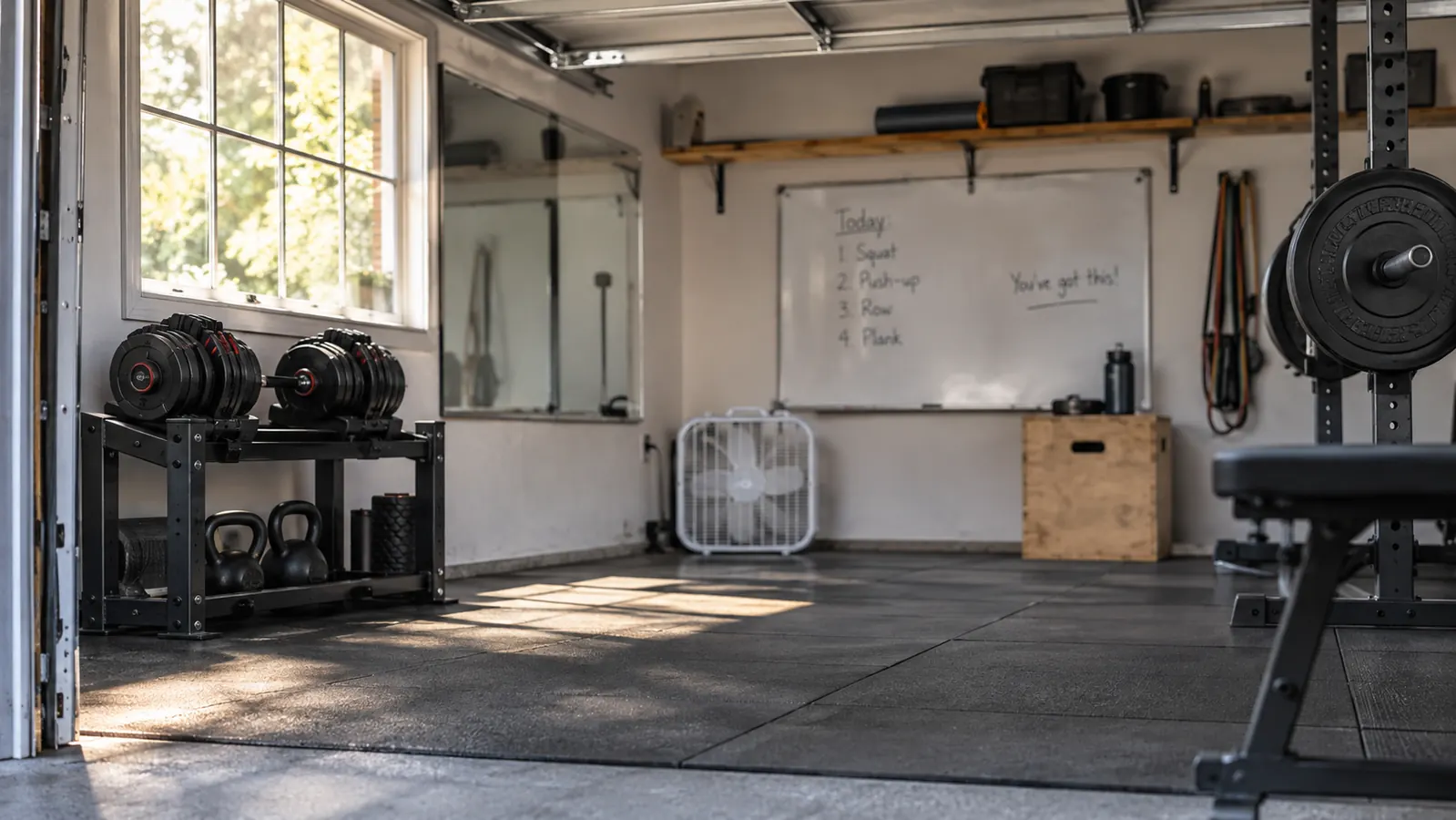
They live on the rubber tiles beside my whiteboard, and they get used four or five times a week, most heavily on Saturday mornings when six neighbors file into the garage and I start handing out weights. The dial is the reason. With a fixed rack of hex dumbbells, a group of six people at six different strengths means six different pairs on the floor, and somebody always ends up carrying a pair across the room. With one adjustable pair, I twist down to 7.5 for the neighbor coming back from a long layoff and back up to 20 for the one who plays tennis three times a week. Setup takes seconds per person.
Ray, my husband, is 58 and has a left knee that has opinions. He does not squat with these and he does not lunge with these. He sits on the bench, presses overhead, does seated rows with a light hinge, and works his arms, and 25 pounds a hand is plenty for every one of those. My own right shoulder dates back to an old injury, which is exactly why the small jumps on this set matter to me, and I will get to that. What I want to establish first is that I know who these are for, because an honest review has to start with the limit.
Here is the practical picture. The dumbbell measures 13.6 inches long and 6.7 inches wide, and the listing gives the pair as a 25 lbs set. That footprint is the reason this works in a one-car garage that also holds a bench, a fan, a mirror and a whiteboard. Nothing gets walked around. Nothing gets tripped over at seven in the morning when half the group is still half asleep.

The 25-Pound Ceiling Decides Everything
Twenty-five pounds sounds like a lot until you count what it does not cover. It does not cover a goblet squat for a grown adult past the first few weeks. It does not cover a Romanian deadlift for anyone with a functioning posterior chain. It does not cover a chest press for a man who has been doing push-ups since high school. What it does cover, and covers well, is shoulders, arms, upper back, light core work, and the kind of reintroduction to strength training that most of my group is actually doing. If your training looks like that, the ceiling is not a problem. It is a boundary you will never touch.
I found the ceiling the way most people will, on a Tuesday in late September. I had written a simple progression on the whiteboard, three sets of ten on goblet squats, and I got through the first two sets at 20 pounds with room to spare. The third set I twisted to 25, did eight reps, and felt the dumbbell top out on me somewhere around rep six. There was nothing wrong with the dumbbell. There was simply no next notch. I finished the set, erased the board, and rewrote the whole block around single-leg work and slow tempo instead of load. That is what progression looks like when the tool stops you. You change the movement, not the weight. It worked, and it is still working, but it is a workaround, and you should know that going in.
What nobody tells you in the listing is that this is a beginner-to-intermediate set wearing the clothes of a full home gym solution. The brand sells it as whole-body, and it is, technically, for a while. The honest timeline in my garage went like this. The returners got three to five months out of it before they wanted more on rows and squats. The two people who walked in already strong were negotiating with the ceiling inside a month. Nobody was angry about it. They just started asking whether I had something heavier, which is the most useful review data I can give you.
Where I would push back on the marketing is the whole-body framing, because it invites you to imagine replacing a rack with this pair. You cannot. This replaces a starter set of fixed dumbbells and a lot of floor space. It does not replace a barbell, and it does not replace heavy dumbbells for anyone whose program is built around them. Read the 25 as a design choice, not a flaw, and the set makes sense. Read it as a promise of unlimited progression and you will be disappointed by March.
What the Quick-Adjust Dial Is Actually Like Mid-Set
Every adjustable dumbbell asks the same question. How annoying is the weight change? With the Lifepro, you set the dumbbell down, turn the dial to the next setting, and pick it back up. That is it. The catch is the word down. You are not changing weight with the thing hovering over your shoulder, and you should not try. In a superset or a drop set that means a pause of a few seconds per hand, which is fine for a garage workout and mildly irritating if you are chasing a clock. I stopped noticing after two weeks. My group noticed for about one Saturday and then stopped too.
I timed it once out of curiosity, because my group asked. From the top of a set of rows, dumbbell down, dial turned, dumbbell back in hand, was about four seconds per hand if I was not rushing. Six to eight seconds for a pair. That is nothing in a straight strength block and it is everything in a circuit where the whole point is to keep moving. I tried running a drop set on lateral raises with both hands going and gave up after two rounds, not because the dial is slow but because the pause broke the rhythm I was chasing. Now I program drop sets with the fixed 5s and 8s and leave the Lifepro pair for the straight sets. Knowing that ahead of time would have saved me an irritating Saturday.
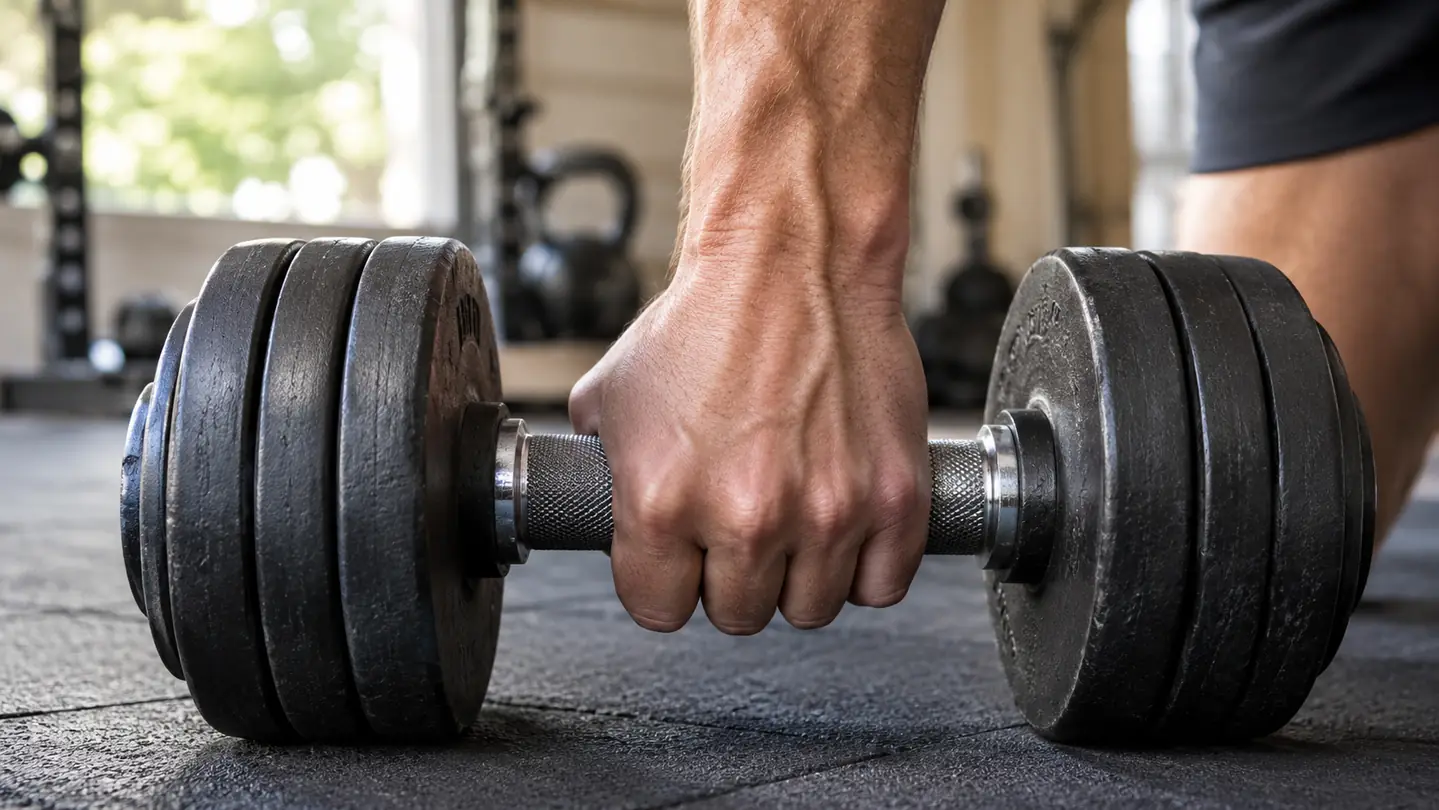
The secure locking mechanism is the part I care about most, because a dumbbell that lets go of its plates mid-press is not a fitness product, it is a lawsuit. I check the lock position before every set with a hand twist, out of habit, and in months of group use nothing has shifted, rattled loose, or surprised me. The textured non-slip grip holds even when my hands are warm, which in an Oklahoma garage in July is the real test. If you have ever had a smooth chrome handle slide in your palm during a set of rows, you will appreciate the texture.
The alloy steel construction also means it does not feel like a plastic gadget. There is no flex in the handle under load at the top setting, and the whole thing reads as a tool rather than an accessory. I have dropped one, once, on rubber tiles, and it survived with nothing worse than a scuff on the tile. I do not recommend dropping them. I mention it because you will, eventually.
The two strongest people in my Saturday group outgrew 25 pounds in about a month. The returners are still using them every week, four months in.
The 2.5-Pound Steps Are the Quiet Win
Here is the feature that does not get headlines and should. 2.5 lb increments. That is nine settings between 5 and 25 pounds. Most adjustable sets jump in 5 pound blocks, which means a bad shoulder goes from comfortable to angry in one move with nothing in between. With this set, my right shoulder can spend three weeks at 7.5 pounds doing lateral raises before it earns 10, and that slow ladder is exactly how an old injury gets talked back into working. I would pay for that alone. So would half the people who come to my garage, most of whom are not chasing a personal best, they are chasing a Tuesday where nothing hurts.
My shoulder routine for the last few months has been boring on purpose. Lateral raises at 7.5 pounds, three sets of twelve, twice a week, for three straight weeks before I would let myself touch the 10. My group thinks I am overly cautious. The point is that this set let me build that ladder without a single jump big enough to flare anything up. On a dumbbell that moves in 5 pound blocks I would have been stuck at 5 pounds or gambling on 10. Here I had a rung in between, and I used it for a month. That is worth more to me than any other feature on the dumbbell, and it is the one nobody puts in the headline.
Ray uses the same ladder on his presses. Ten, then 12.5, then 15. No drama, no ego. The increments are small enough that a 58-year-old knee and a 52-year-old shoulder can both make progress without a single session that feels like a setback. That is not a glamorous selling point. It is the reason this pair has stayed in my garage while other gear has migrated to the shelves.
Build, Grip, Footprint and the Rack
The storage rack is listed as included, with a caveat worth reading carefully. The listing describes the set as one adjustable dumbbell, or a pair if applicable, plus the matching storage rack when included. That is listing language doing what listing language does, and it means the configuration you order may not be the configuration you assumed. Check the option you are buying, count the dumbbells in the photos, and confirm the rack before you commit. It takes one extra minute. It saved me a week of being annoyed.
The rack itself, when you get it, sits low and holds the pair side by side, which means the whole set takes up a strip of floor about the width of a bench. I keep mine between the whiteboard and the fan. On Saturday mornings I pull the pair out, and by the time the group leaves it goes back on the rack and the floor is clear again. That sounds trivial until you have tripped over a hex dumbbell in bare feet at 6:45 in the morning, which I have, and which is how I ended up caring about storage in the first place.
The 13.6 inch length is the other thing I would want to know up front. A fixed 25 pound hex dumbbell is shorter, and on seated curls or anything where the weight passes close to your thigh, the extra length is noticeable. Not a dealbreaker. Noticeable. I angle my forearms slightly and it goes away. If you have short arms or you do a lot of close-body work, handle one before you buy the pair, or buy from a seller with a return window you trust.
What I Liked
- Nine settings from 5 to 25 lbs in 2.5 lb steps, which is a real progression ladder for a healing shoulder or knee
- The quick-adjust dial lets one pair cover a whole group of different strengths without six pairs on the floor
- Compact 13.6 by 6.7 inch footprint sits on a shelf instead of owning the floor
- Alloy steel build with a textured non-slip grip that holds up in a hot garage
- The secure locking mechanism has not slipped or rattled loose in months of group use
Where It Falls Short
- 25 pounds a hand is the ceiling, and steady lifters reach it in weeks
- You have to set the dumbbell down to change weight, so drop sets cost you a few seconds
- 13.6 inch length crowds seated curls and other close-body movements
- The listing language around single versus pair and rack inclusion needs checking before you order
Who This Is For
This is for the person rebuilding a habit, not chasing a number. If you are somewhere between 35 and 65, working out in a spare room or half a garage, coming back after years away or starting for the first time, and your program is shoulders, arms, upper back, core and light leg work, the Lifepro set covers everything you will do for months. It is also genuinely good for a household where two people train at wildly different levels. One dial, one shelf, no negotiation over whose turn it is with the 15s.
It is a good fit for anyone rehabbing carefully, too. The 2.5 pound steps are the closest thing to a dial-a-load you will find at this size, and low-impact work is where this set earns its place. My shoulder and Ray's knee have both been served well by it. That is the honest endorsement. Not that it makes you strong, but that it lets you show up on the days you are not.
Who Should Skip It
Skip it if you already train seriously with dumbbells. If your working sets on rows or presses are at 30 pounds or above, this set is a downgrade you will notice in week two. Skip it if your program is built on squats, deadlifts and pressing volume, because 25 pounds will not load those lifts for long and you will spend more time working around the limit than working with the tool. Skip it if you want a set that grows with you for years without a second purchase, because this one does not. It is a starting set, sized and built like one.
And skip it if you need to change weights mid-set without breaking stride, because you cannot. The dial is quick, but it is not instant, and a circuit that depends on rapid load changes will feel like it has a speed bump in it. That is a small thing for most of my Saturday group and a real annoyance for anyone training with a stopwatch. Know which person you are before you order.
If 25 pounds a hand is honestly enough, this is the pair I keep in my garage
The Lifepro adjustable dumbbells give you 5 to 25 lbs in 2.5 lb steps, a quick-adjust dial, alloy steel construction and a textured non-slip grip, in a footprint that fits on a shelf. Confirm the pair and rack configuration on the listing, then check today's price.
Amazon Check Today's Price on Amazon →