
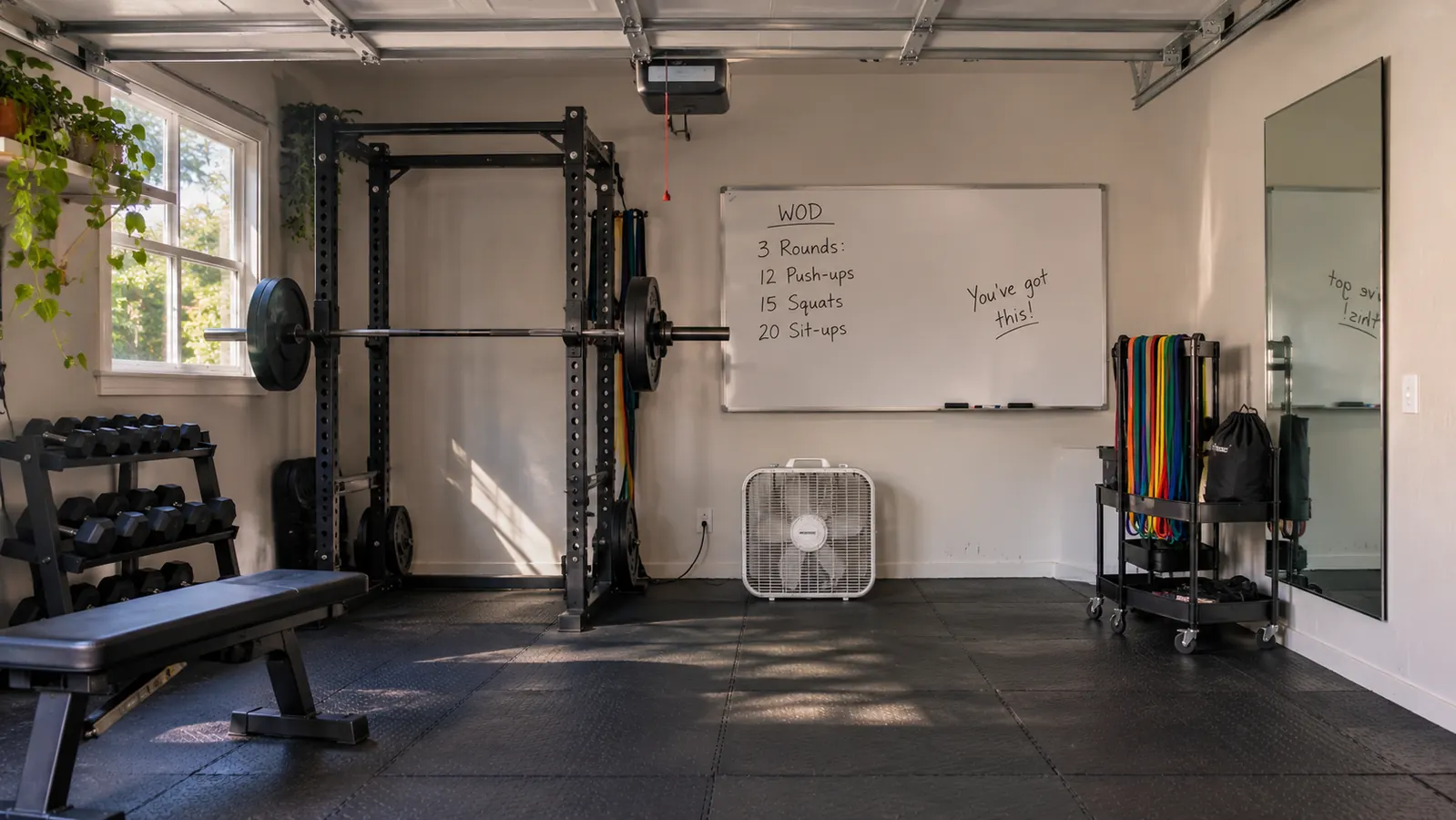
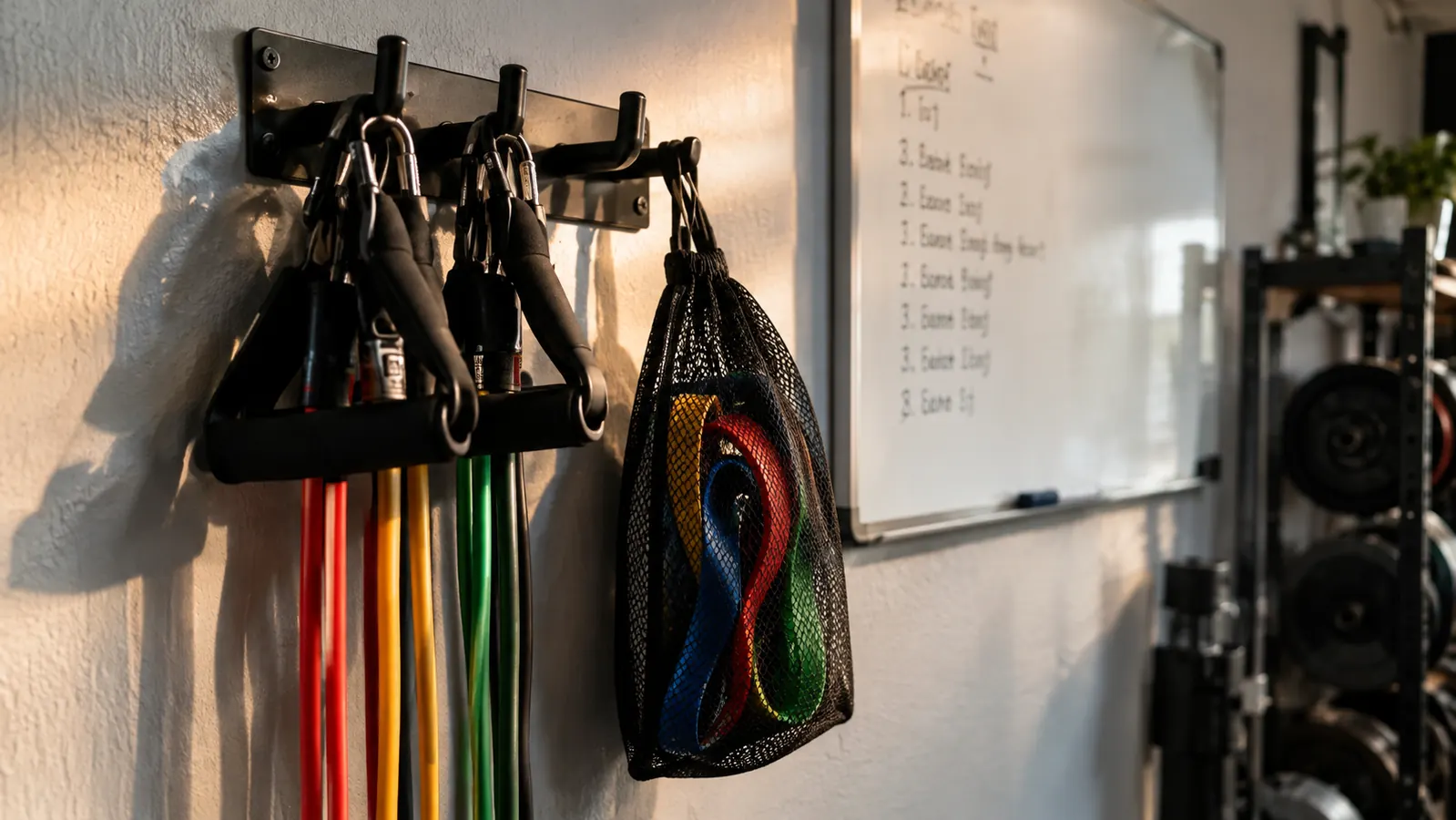
I have a milk crate in my garage gym and for years it held two kinds of resistance gear that I treated like rival football teams. The Fit Simplify loop bands lived in the top drawer of my rolling cart. The tubes with handles hung from a hook on the wall beside my whiteboard, which is where things go when I want to feel organized. Every few months I decided one of them was the smarter buy, and every few months I changed my mind.
Here is the short answer, since that is probably why you clicked. If you want one set that covers warm-ups, hip work, shoulder work, travel and a beginner's first month of training, get the loop bands. If your training is mostly pulling and pressing and you want a handle in your fist, tubes with handles do that job better. Most of the people who work out in my garage end up with the loops first and the tubes second, and I do not think that order is a mistake.
| Fit Simplify Loop Bands | Tubes With Handles | |
|---|---|---|
| Grip on pulling moves | A flat loop sits in your palm and can roll or bunch when your hands get sweaty | A molded handle gives a full-hand grip that does not roll |
| Resistance range in one box | Five bands, extra light through heavy, all in one set | Most sets give you one tube, sometimes two |
| Hip and leg work | The loop goes around the thighs or ankles and stays put for walks and bridges | A long tube with handles gets in the way around the legs |
| Rows and presses | Workable, but you feel the band in your palm more than in your back | Handles make rows and chest presses feel natural |
| Storage | The whole set weighs 3.5 ounces and stuffs into the included bag | Bulkier, and the handles tangle unless you hang them |
| Wear points | Latex thins and nicks over time, so check the edges before sessions | The tube sheath protects the core, but handles can pull loose at the connection |
| Learning curve | Instruction booklet with dozens of illustrated exercises | Whatever chart comes in the box, usually a shorter list |
| Going heavy | Tops out at whatever the heavy loop will give you | You can stack tubes and keep adding resistance |
| Best for | Warm-ups, hips, shoulders, travel and first-month training | Pulling volume, back and chest days |
Where Fit Simplify Wins
The strongest argument for the Fit Simplify set is that it is five bands, not one. You get five resistance levels in a single purchase, so a beginner can start with the extra light band on a shoulder warm-up and the same person can use the heavy band for a glute bridge six weeks later without buying anything else. The whole set weighs 3.5 ounces and comes with a carry bag. Mine lives in the side pocket of my gym bag, which means it comes to the park with me and to my sister's living room when I visit, and I have never once noticed the weight.
The second argument is the instruction booklet, which includes dozens of illustrated exercises. I have taught long enough to know that the hardest part of home training for a beginner is not effort. It is not knowing what to do on day one, standing in a spare room holding a piece of rubber and feeling silly. A booklet that shows you where to put the band around your thighs for a lateral walk, and how to loop it around a post for a row, shortens that fog. My Saturday group passes the booklet around more than they pass the bands, and two of them have photographed pages to keep on their phones.
The third argument is width. These are 3 inches wide and a quarter inch thick, so the band spreads pressure across your thigh or your palm instead of biting into one line of skin. That matters more than people expect. A narrow band around both ankles during lateral walks will make you quit the set early, and quitting early is how home training quietly dies.
Where Tubes With Handles Win
Now the honest half. Tubes with handles win the moment the movement is a pull. A loop band held in your palm rolls and bunches and digs into the web of your thumb when you go heavy, and by the third set you are fighting the band instead of working your back. A handle gives you a full-hand grip, so a seated row, a chest press or a face pull feels like an actual exercise. If your goal is back and chest volume, handles make that easier to get.
Tubes also go heavier and reach farther. You can stack two tubes for a heavier set, and the extra length means you can stand on the middle and press overhead with room to move. A loop band is a closed circle, so its range is its range. For Ray, who is 58 with a bad left knee and wants to row and press without loading a barbell, that extra length and that handle are the difference between doing the work and skipping it.
Five levels, one small bag, and a booklet that shows you what to do on day one
This is the set I keep on the cart for warm-ups, hip work and travel. Five loop bands, a carry bag and dozens of illustrated exercises. Today's price is on the listing.
Amazon Check Today's Price on Amazon →How I Actually Use Each One in My Garage
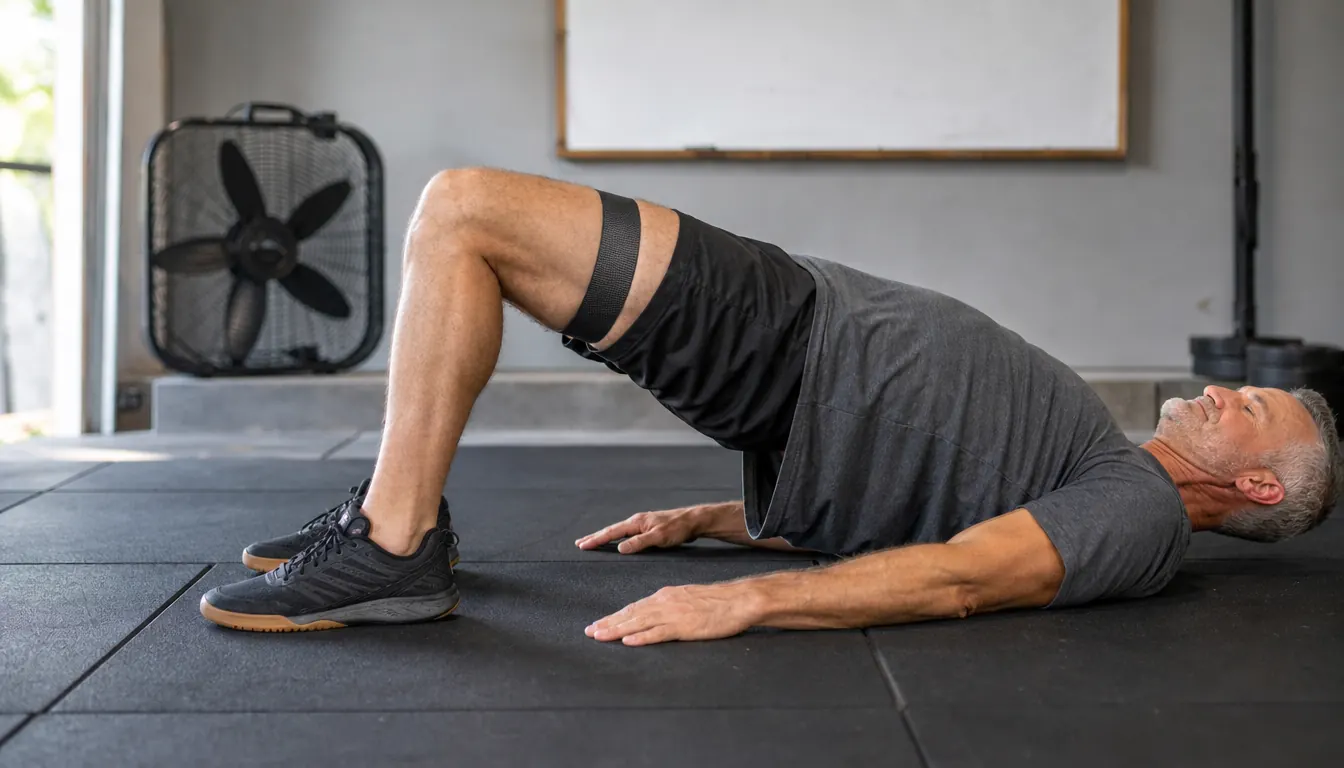
My week looks like this. Monday and Thursday, Ray and I do a short session before dinner. His knee keeps us low impact, so we start with the extra light loop around his thighs for lateral walks and finish with the light band for clamshells. That is loop band work from top to bottom, and it is why the loops stay out on the cart instead of buried in a drawer. He has never once asked to use the tubes for that half of the session, and I have never suggested it.
Wednesday is my own upper body day. I warm my right shoulder up with the light loop, then switch to the tubes for rows and presses, because I want the grip and I want the length. Saturday, my group comes over and the loops win again. Six neighbors, one set of five bands, a whiteboard of exercises, everybody rotating. I have never had a Saturday where the loops sat unused, and I have never had a Saturday where anybody fought over the tubes. On the last Saturday in September we had seven people instead of six, and the extra person simply took the heavy band and did the same circuit with fewer reps. Nobody sat out and nobody waited. That is the sort of thing you cannot plan for when you buy a single tube.
The pattern is not complicated. Loops for legs, hips and shoulders. Tubes for pulling and pressing. If I had to shrink my garage down to one drawer, the loops would survive the cut and the tubes would move to the hook on the wall. That is not a knock on the tubes. It is a comment on how much of a beginner's session is legs, hips and shoulders. The one exception was a Tuesday in October when my shoulder was cranky and I did the entire session with the extra light loop around my wrists for presses. It was not a great workout, but it was a workout, and that counts for more than a skipped one.
Six neighbors rotate through one set of five loop bands on a Saturday morning and nobody waits long. That is the whole argument for buying the set.
The Mistake I Made With Both
For the first year I owned tubes, I tried to use them for hip work, which is a bit like using a garden hose as a belt. Looping a long tube with handles around your thighs means the handles are in the way of your knees and the tube slides down as soon as you move. I also tried to substitute a loop for a row by wrapping it around my foot, and it slipped off my shoe mid-set. Both of those were user errors, not product failures, but they are exactly the kind of error a beginner makes in month one.
The fix was to stop asking one tool to do the other's job. Loops go around legs and wrists. Tubes go in your hands with something solid to anchor them. Once I split the work that way, I stopped being annoyed at both of them. I also stopped using a bare knot around my garage post after it slid down mid-set three times in one evening. Now the tubes clip to a short strap I wrapped around the post, which takes about ten seconds to set and has not budged since. Ten minutes of fiddling saved me a hundred small annoyances, and it is the reason the tubes actually get used on Wednesdays. If you already own one and are thinking about the other, ask yourself which half of your workout feels awkward, and buy for that half first.
What the Numbers on the Listing Actually Mean
The Fit Simplify bands are listed at 12 inches long by 3 inches wide and a quarter inch thick, made of latex, with five resistance levels. In practice, that width is what keeps the band from rolling into a rope on your thigh during lateral walks, and the thickness is what gives the heavy band its snap. A narrow band cuts. A wider one spreads the pressure. Three inches is wide enough that I can loop it around both ankles and still walk across the garage without wincing.
The 3.5 ounce figure is for the whole set, which is why the carry bag is genuinely useful rather than a marketing extra. I take mine to my sister's house when I visit and it disappears into a tote bag. Latex does not love being left in a hot car, so mine travels inside the bag and comes back inside the house. That is the entire care routine. Check the edges, keep them out of the sun, and they hold up. One of my light bands picked up a small nick near the edge last spring, probably from being dragged across a concrete step on my way out to the driveway. I felt it under my thumb during a warm-up, retired that band, and moved on with the other four. That is the entire failure history so far.
What I Tell a Brand New Beginner
If a neighbor asks me what to buy for their first month, I hand them the loops and tell them to ignore everything else on the internet for thirty days. The reason is not that loops are magic. It is that the first month is about learning where your hips are and how to keep your ribs down, and a loop gives you feedback with no setup at all. You cannot cheat a band around your thighs. It tells you immediately whether your knees are caving in.
Around week six, that same neighbor usually tells me their rows feel like nothing, and that is the cue to add tubes. Not because the loops failed, but because the exercises changed. The booklet is usually the piece that gets handed around first. One neighbor photographed the lateral walk page and texted it to her sister, who was starting from zero in a living room with no equipment at all. Buying in that order keeps the first purchase small and keeps the second one honest, which is more than I can say for most of the gear I have bought over the years.
Who Should Buy Which
Buy the Fit Simplify loops if you are new to resistance work, if you train in a small space, if you travel, or if your priority is hips, glutes and shoulders. Buy them if you want one set that a beginner and a fit 52-year-old can both use in the same session, which is exactly my situation on a Monday night. Buy them if a booklet of illustrated exercises would actually get used in your house, because for the first month that is a real advantage and not a throwaway extra.
Buy tubes with handles if you already know you like pulling movements and you want to load them, or if grip comfort is the thing that has stopped you from doing rows in the first place. Buy them if you have a door anchor or a solid post and room to stand back from it. And if you are buying for a household with two different training styles, buy both. The loops are small enough that owning both does not create the storage problem you are picturing.
Start with the set that fits in a coat pocket
Five loop bands, five resistance levels, a carry bag and an illustrated guide. If you want the version that covers warm-ups, hip work and travel, this is the one that stays on my cart.
Amazon Check Today's Price on Amazon →